
The State of the Leadership Training Market
Leadership training market size, growth outlook, buyer demand and competitive landscape.
Training Industry, Inc.’s Leadership Training Market Report provides a comprehensive, data-driven analysis of the leadership training market. Explore market size, growth forecasts, buyer demand and competitive dynamics shaping leadership development.
Use these insights to understand market trends, investment priorities and the forces shaping leadership development.


Table of Contents
Key Findings From the Leadership Training Market
Market Overview, Growth Outlook and Industry Trends
Regional Leadership Training Market Snapshot
What is Driving Demand for Leadership Training
Top Industries Sourcing Leadership Services
Leadership Development Investment Priorities
Market Overview, Growth Outlook and Industry Trends
The leadership training market continues to evolve as organizations place greater emphasis on leadership capability as a driver of workforce readiness, organizational performance and business success. Leadership development is increasingly being integrated into broader talent strategies, succession planning efforts and business transformation initiatives, reinforcing its role as a long-term organizational investment rather than a standalone training activity.
The Leadership Training Market Report captures how the market is adapting to changing buyer expectations, shifting workforce demands and new approaches to leadership development. It explores how organizations are investing in leadership capability, where providers are focusing innovation and the trends influencing future demand across the market. The report provides a comprehensive view of the leadership training ecosystem, examining both organizational demand and provider activity to help market participants understand where opportunities are emerging and how the market is evolving.
While economic uncertainty and increased scrutiny of learning investments have contributed to longer purchasing cycles and more cautious spending decisions, organizations continue to prioritize leadership development. Rather than signaling declining demand, current market conditions reflect focus on outcomes, workforce readiness and leadership effectiveness.
Key Findings From the Leadership Training Market
- The global leadership training market is valued at approximately $3.25 billion and is projected to grow steadily through 2028.
- Leadership development remains a strategic investment as organizations prioritize workforce readiness, transformation, succession planning, manager effectiveness and AI-driven change.
- Leadership training demand is distributed broadly across global markets, with international business-English markets creating additional growth opportunities.
- Business services and consulting, manufacturing, technology, banking and finance, and pharmaceuticals account for approximately 44% of leadership training spending.
- Buyers increasingly expect coaching, practice-based learning, AI-enabled personalization, integrated development journeys and measurable behavior change.
- In a fragmented market, providers are differentiating through specialized methodologies, coaching models, learning design, assessment capabilities and demonstrated impact.
Leadership Training Market Size and Growth Outlook
How large is the leadership training market?
The global leadership training market is estimated at approximately $3.25 billion and is projected to experience steady growth through 2028.
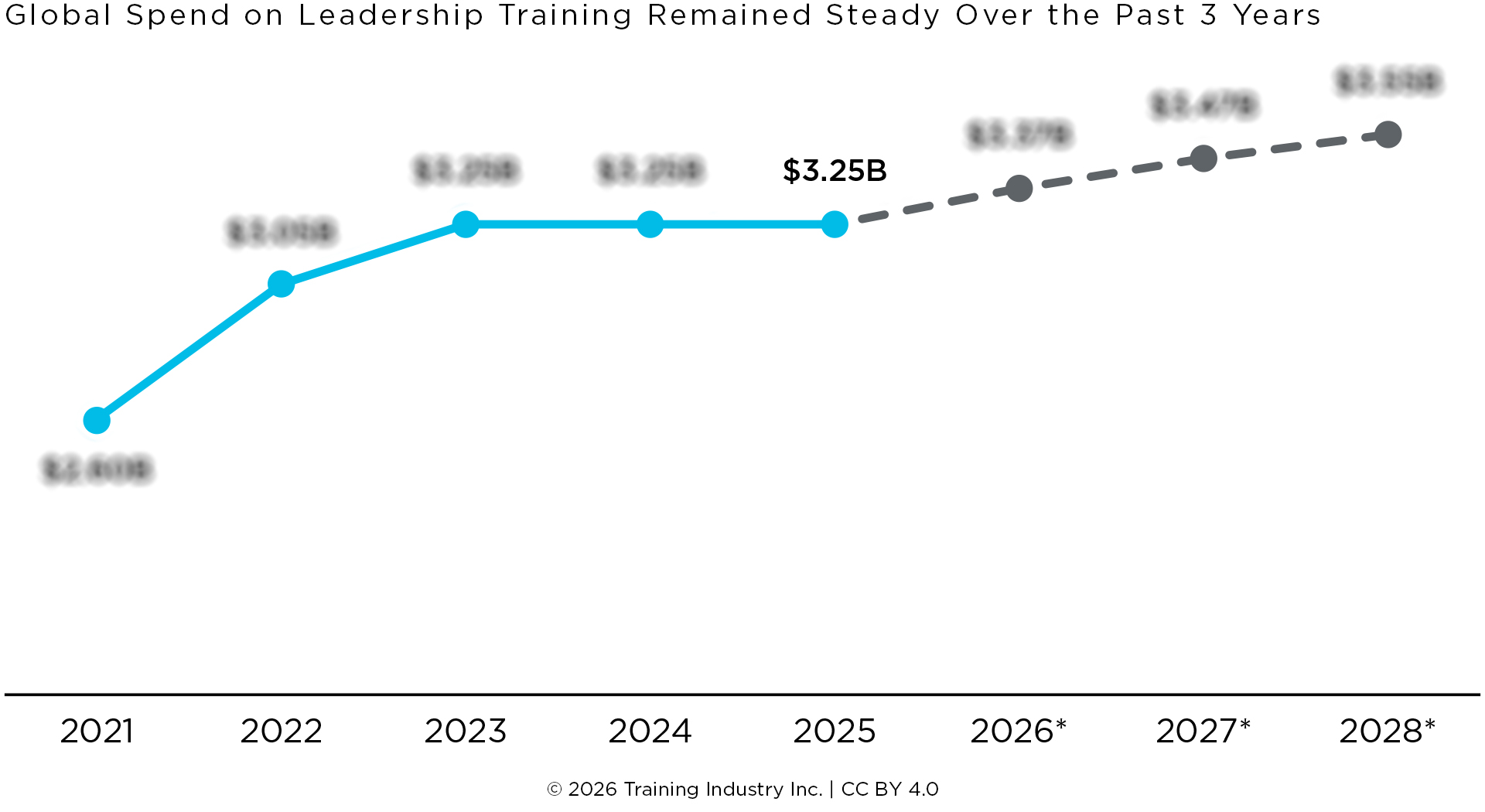
While economic uncertainty has contributed to more cautious spending and longer purchasing cycles, the market is expected to return to moderate growth as organizations continue investing in leadership capability, workforce readiness and succession planning.
Regional Leadership Training Market Snapshot
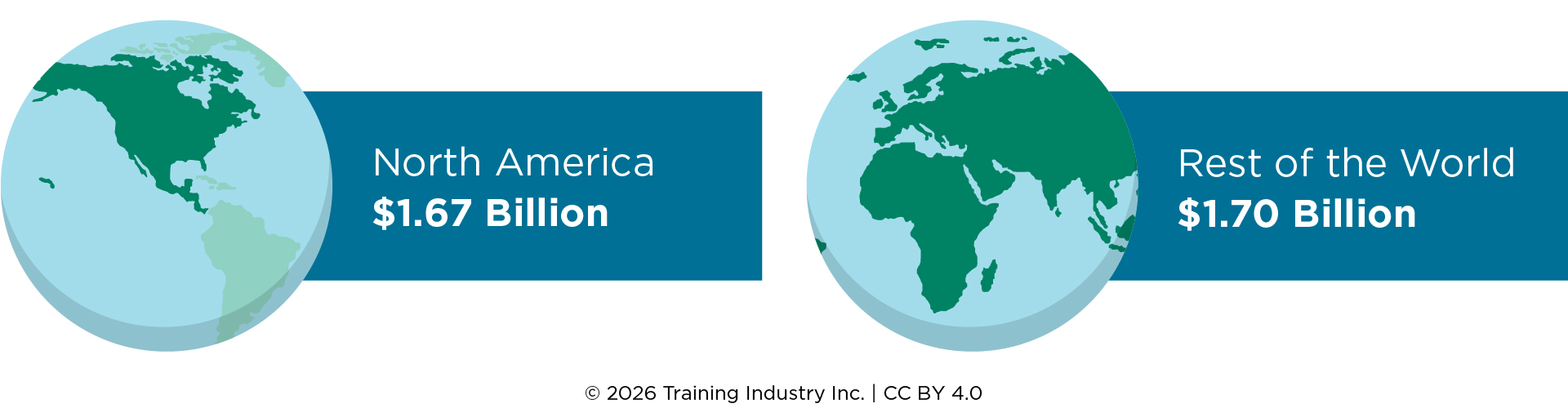
Leadership training demand remains broadly distributed across global markets, with spending divided relatively evenly between North America and the rest of the world.
While North America continues to represent a significant share of the market, international demand is helping drive future growth opportunities across key business-English markets.
What is Driving Demand for Leadership Training?

Workforce readiness:
Preparing leaders at all levels to navigate workforce transitions, building leadership pipelines and accelerating readiness for new and expanded responsibilities.

Organizational transformation:
Supporting leaders through business transformation, culture change, restructuring and other initiatives that require effective execution and change leadership.

Succession planning:
Developing future leaders and strengthening bench strength to address leadership turnover, retirement risk and long-term talent needs.

Manager effectiveness:
Improving coaching, communication, decision-making and employee development capabilities among new and experienced managers.

AI-driven change:
Helping leaders guide teams through artificial intelligence adoption while strengthening the judgment, adaptability and human-centered skills needed in AI-enabled workplaces.
Top Industries Sourcing Leadership Training
Five industries account for approximately 44% of leadership training spending:

Business services and consulting

Manufacturing

Technology

Banking and finance

Pharmaceuticals
Understanding which industries invest most heavily in leadership development can help providers identify high-opportunity markets, align offerings with buyer needs and focus growth efforts where demand is greatest.
Leadership Development Investment Priorities
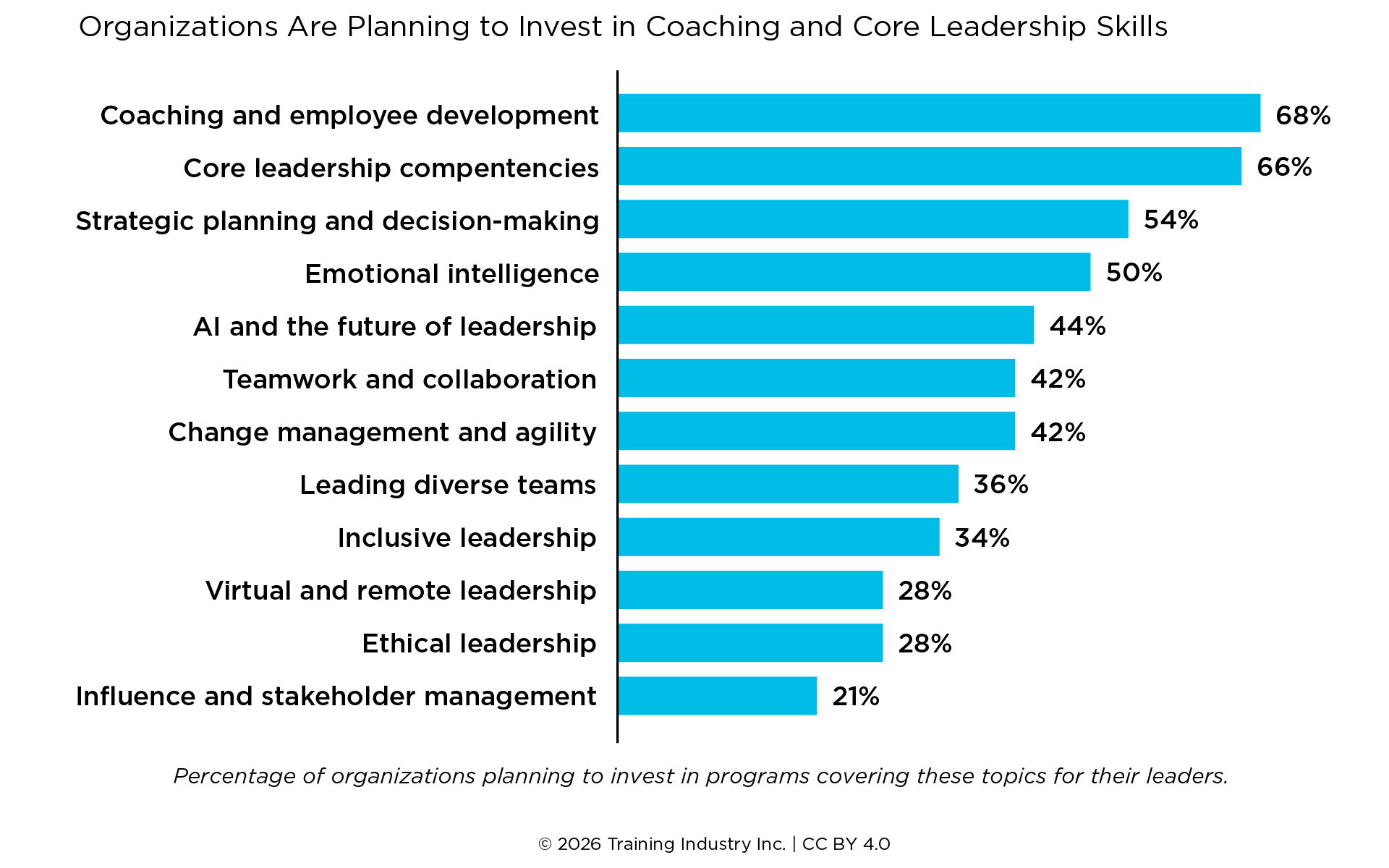
Organizations concentrate leadership development investment around a focused set of capabilities that directly influence performance, employee development and organizational effectiveness. As leadership development becomes more strategically embedded within organizations, investment continues to center on the skills leaders need to navigate change, develop talent and drive results.
The Leadership Training Buyer Journey
How do organizations buy leadership training?
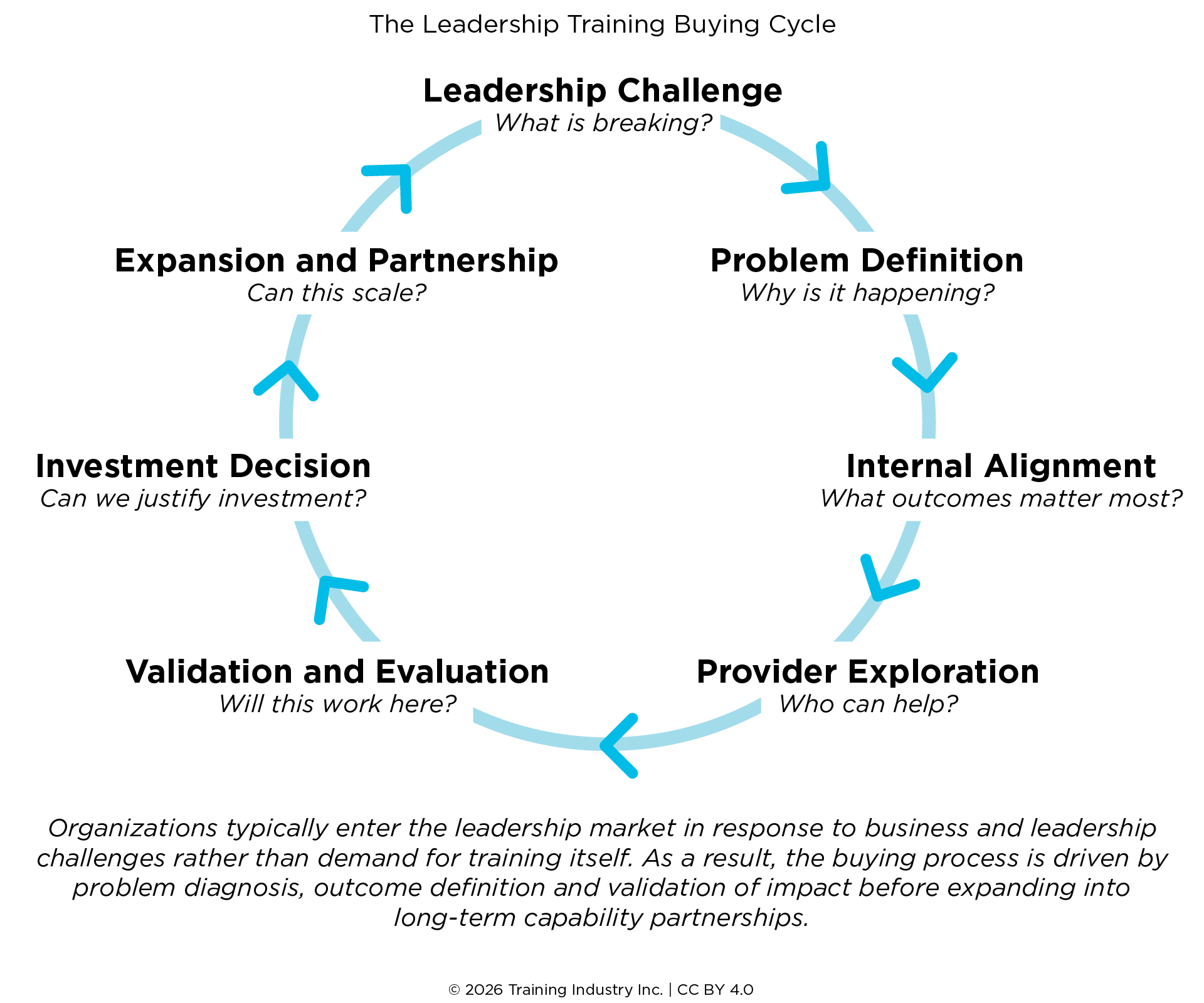
Leadership training purchases are typically driven by business challenges rather than training needs alone. Organizations often begin evaluating providers when leadership capability gaps begin affecting employee performance, organizational change, workforce readiness or business outcomes.
Understanding how buyers identify needs, evaluate solutions and select providers offers valuable insight into purchasing behavior across the leadership training market.
Leadership Training Trends Shaping the Market
These trends are influencing leadership training buyer expectations, provider strategies and future leadership development investments:
Coaching Is Becoming a Core Component of Leadership Development
Organizations are increasingly supplementing formal training programs with individual and group coaching to provide personalized support, reinforce learning and accelerate leadership growth.
Greater Emphasis on Practice-Based Learning and Real-World Application
Leadership development is shifting from classroom-based instruction toward simulations, experiential learning, action learning projects and other approaches that enable leaders to apply skills in real business situations.
AI-Enabled Coaching, Feedback and Personalization
Providers are incorporating AI-powered tools to deliver personalized learning recommendations, real-time feedback, leadership assessments and scalable coaching experiences.
Integrated Leadership Development Journeys and Learning Ecosystems
Organizations are moving beyond standalone leadership programs in favor of continuous development journeys that combine training, coaching, assessments, mentoring and learning technologies into a connected experience.
Increased Emphasis on Measurement and Behavior Change
Buyers are placing greater focus on demonstrating the impact of leadership development through behavior change, business outcomes, workforce metrics and long-term leadership effectiveness rather than participation alone.
Why This Report Matters

Leadership development remains a critical component of talent strategy, workforce readiness and organizational performance. As buyer expectations evolve and competition intensifies, market participants need credible intelligence to understand where demand is growing, how purchasing priorities are shifting and which trends are shaping the future of the market.
Whether you’re a leadership training provider, investor, analyst or consultant, the Leadership Training Market Report provides the market intelligence needed to identify opportunities, validate strategic decisions, benchmark against competitors and build more informed growth plans.
Key Players in the Leadership Training Market
The leadership training market remains highly fragmented, with global providers, leadership consultancies, executive coaching firms and specialized learning organizations competing for market share. As buyer expectations evolve, providers are increasingly differentiating through coaching models, leadership methodologies, learning design, assessment capabilities and their ability to demonstrate measurable impact.
The companies below represent a selection of providers included in Training Industry’s 2026 Top Leadership Training Companies lists, highlighting organizations that are helping shape the competitive landscape of the market.
| Top 20 | |
| Abilitie | DDI |
| Advantage Performance Group | Fierce Inc. |
| Ariel Group | FranklinCovey |
| Blanchard | GP Strategies |
| BTS Group | Hemsley Fraser |
| Cegos Group | Impact |
| Center for Creative Leadership | NIIT |
| Crestcom International | Thayer Leadership |
| Crucial Learning | The Center for Leadership Studies |
| Dale Carnegie | Wilson Learning Worldwide |
| Watch List | |
| Actors in Industry | FlashPoint Leadership |
| Adeption | FutureThink |
| AIIR Consulting | Infopro Learning |
| Alchemist Learning and Development | Leadership Management International, Inc. |
| Bluepoint Leadership Development | LifeLabs Learning |
| Canvas Leadership | Pryor Learning |
| CrossKnowledge | SHRM Linkage |
| DX Learning Solutions | Tack TMI |
| Educate 360 | The Humphrey Group |
| Elevate Leadership | The New Standard |
| ExperiencePoint | TTA |
Frequently Asked Questions About the Leadership Training Market
What is the size of the leadership training market?
The global leadership training market is estimated at approximately $3.25 billion and is projected to grow steadily through 2028.
What is driving growth in the leadership training market?
Growth is being driven by workforce readiness, organizational transformation, succession planning, manager effectiveness and AI-driven change.
What are the major trends in leadership training?
Major trends include coaching, practice-based learning, AI-enabled personalization, integrated learning journeys and greater emphasis on measurable behavior change.
Which industries spend the most on leadership training?
Business services and consulting, manufacturing, technology, banking and finance, and pharmaceuticals account for approximately 44% of leadership training spending.
Who are the major leadership training providers?
The market includes global providers, leadership consultancies, executive coaching firms and specialized learning organizations, including companies recognized on Training Industry’s Top 20 and Watch List.
Get the Leadership Training Market Report
Access the Leadership Training Market Report from Training Industry, Inc. Research to explore the data, trends and competitive insights shaping the global leadership training market.