

Published in Fall 2026
Imagine an organization launching a new initiative to implement generative artificial intelligence (AI). They purchase the system and assign mandatory training to all employees. One employee named Pat was the highest performing trainee. He listened, studied, asked questions, took notes and applied his learning. The learning and development (L&D) function conducted a performance evaluation 90 days post training. Everyone’s performance remained the same except for Pat, whose performance improved by 20 percent. The question L&D must then answer is, what was the impact of the learning on the business?
This scenario mirrors one of the most common challenges in corporate learning, which is that training can improve individual knowledge but often does not improve organizational performance. For organizational performance to improve, collective intelligence, relationships and collaboration should be part of the organizational culture. These performance improvement catalysts can be practiced and furthered in the organization through the discipline of knowledge management.
How Knowledge Management Fixes the Learning-Performance Gap
A software sales vendor I recently worked with experienced the challenge of the learning-performance gap. This challenge became evident when employees attended training and virtual classes, yet the knowledge they get from customers’ insights remained within the individuals. There was no organizational learning and as a result performance stayed stagnant.
If the training serves only one purpose, which is often just the delivery of information, it is likely that the learning-performance gap will persist. Training does not equal organizational knowledge. That knowledge is embodied in the people and when these people leave the organization, a significant amount of it leaves with them.
The solution is to create an environment for knowledge to flow after the training ends, acting as the bridge that connects learning and performance. That is exactly what knowledge management (KM) can build.
For L&D professionals, KM is a discipline that extends learning beyond the classroom. With KM used as a design lens, trainers can move beyond content delivery to become knowledge flow designers and facilitators, creating an environment for all employees to learn in the flow of work. The KM tools that make that shift possible are practical, low-cost and immediately applicable.
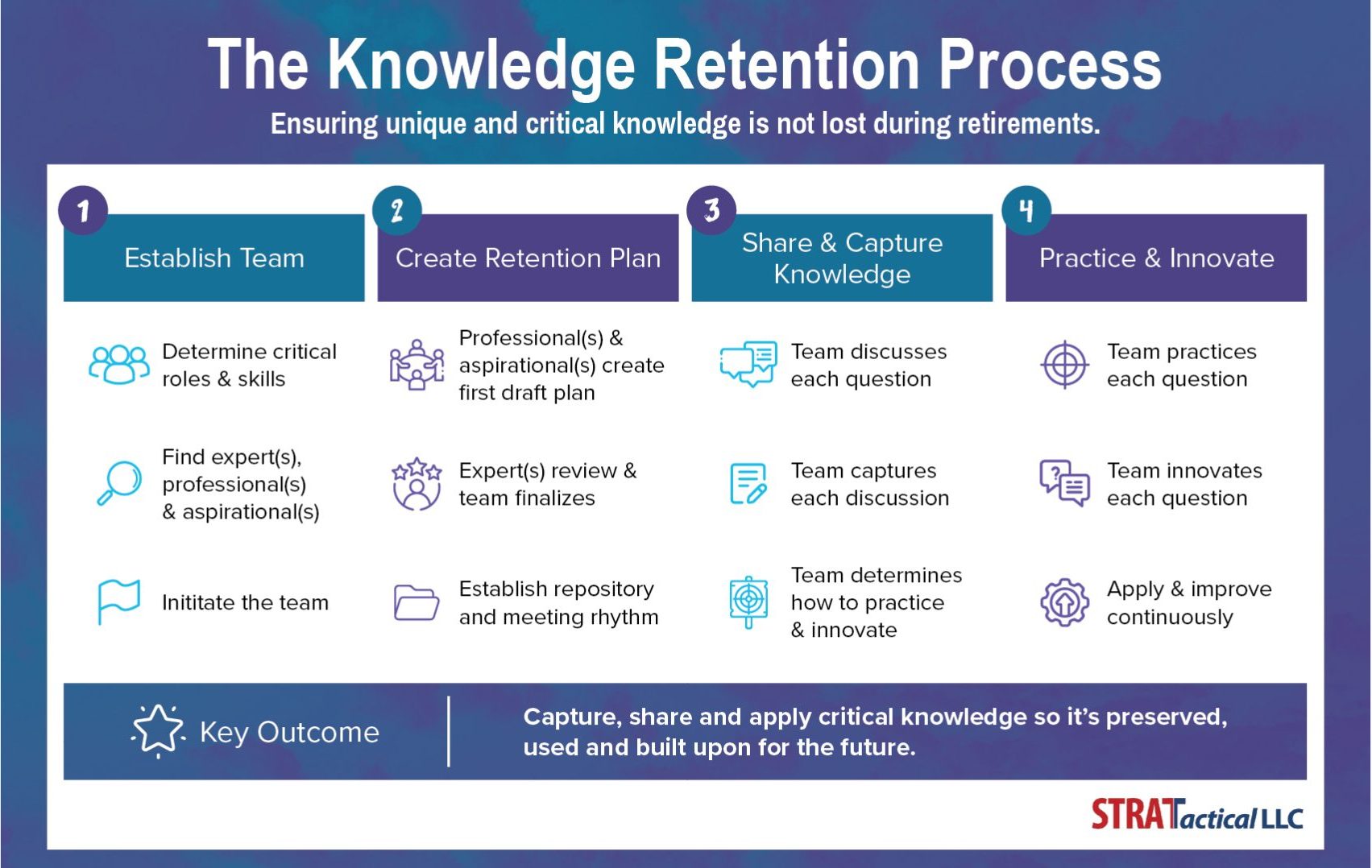
Communities of Practice: Keep the Conversations Going After Training Ends
One of the common problems with training in organizations is that the connections and conversations that the learners develop during the training fade away as soon as the training ends.
Communities of practice (CoPs) — a group of people who share a passion, concern or set of problems and regularly interact to learn how to do it better — are designed to solve that problem.
In the software sales organization, CoPs became the destination for the connections and conversations post training. It provided space for salespeople who attended the same training to share and discuss what worked with customers, what didn’t and why, long after the training ended. The result was that training insights were shared and became a collective knowledge that grows with time rather than disappears.
There are important factors to consider when creating a CoP. Senior leadership support, defined structure and a knowledge-sharing culture are non-negotiables. If any of them is missing, the momentum and the continuity of the CoPs might be negatively impacted. An initial assessment of these requirements and the organizational readiness can help sustainable CoPs.
Implementation Tip
Start with a broad domain, select a senior leader as a sponsor and determine who will be responsible for meeting logistics. Design the first few meetings to be conversational. With time, the community will find its own pathway and more specific topics to address.
Knowledge Café: Unpack What Trainees Already Know
Another problem training professionals experience is that trainees know more than what is in the training material, but there is no structured space to surface it. The Knowledge Café facilitates that. David Gurteen, the facilitator who created this process, defines Knowledge Cafés as “a conversational process that brings a group of people together to share experiences, learn from each other, build relationships and make a better sense of a rapidly changing, complex, less predictable world to improve decision making, innovation and the ways in which we work together.”
The software sales organization convened monthly Knowledge Cafés. They use a real sales challenge they are facing and present a thought-provoking question where all participants can contribute their experiences and knowledge. This is information that isn’t necessarily in any training manual — it’s knowledge that exists in the room. The café gives them a space to unpack it.
Implementation Tip
Use Knowledge Cafés in training to reinforce the content. Start by inviting a speaker to present the topic, then prepare a thought-provoking question to ask participants. The presentation, or provocation, of the topic is only 15 minutes, which then gives the majority a 90-minute session for the participants to engage in small group conversations. After three 15-minute rotations of group discussions, the whole group comes back together. The conversation and the emergent insights are the desired outcome.
After-Action Reviews: Turn Experience Into Learning
In organizations where debriefing occurs informally, if at all, they miss on the opportunity to address critical questions: What was supposed to happen, what actually happened, why did it differ and what will we do differently? After-action reviews (AARs) create a structured space to address these questions.
In the software sales organization, AARs became a core approach to process the teams’ experiences after not only training, but also any sales milestones.
The structured debriefs along with unstructured conversations can provide more knowledge about successes and failures. With a trained facilitator, structured AARs can significantly improve performance over time. The training and conversations should occur in an environment of psychological safety.
Implementation Tip
Keep AARs to 15-20 minutes and ask these four questions: What did we plan? What happened? Why did it differ? What will we do differently? Run them after training milestones or any work event.
Action Learning Sets: Solve While Learning
If training addresses what employees should know, action learning sets (ALSs) address what employees struggle with right now. ALSs, as created by Reg Revans, are used to enable small groups to engage in conversations about specific challenges. An ALS can be a 30-minute activity. It starts with the person who has an issue or a problem to solve. That person is called the challenge owner. The participants listen to the challenge, write clarifying questions and individually ask one question to the challenge owner. They then listen to the response from the challenge owner and then write their recommendations. Afterward, they each offer only one recommendation to the problem.
In the software sales organization, ALSs were in onboarding to help new hires to work through real-life scenarios rather than hypothetical ones. This helped new hires close the gap between training content and live application faster than any training class has done.
Implementation Tip
Introduce ALSs at the end of the training program so that the participants can bring a real challenge. Listening before advising and limiting participants to one question and one recommendation each provide the structure needed for creative thinking.
What the Shift Looks Like in Practice
The software sales organization achieved measurable results when it combined experiential learning with these KM tools and embedded them in the daily workflow. They used CoPs for ongoing peer knowledge exchange, Knowledge Cafés for surfacing tacit knowledge, AARs for more structured reflections and ALSs for real-time problem-solving.
The following key performance indicators (KPIs) measured the transformation:
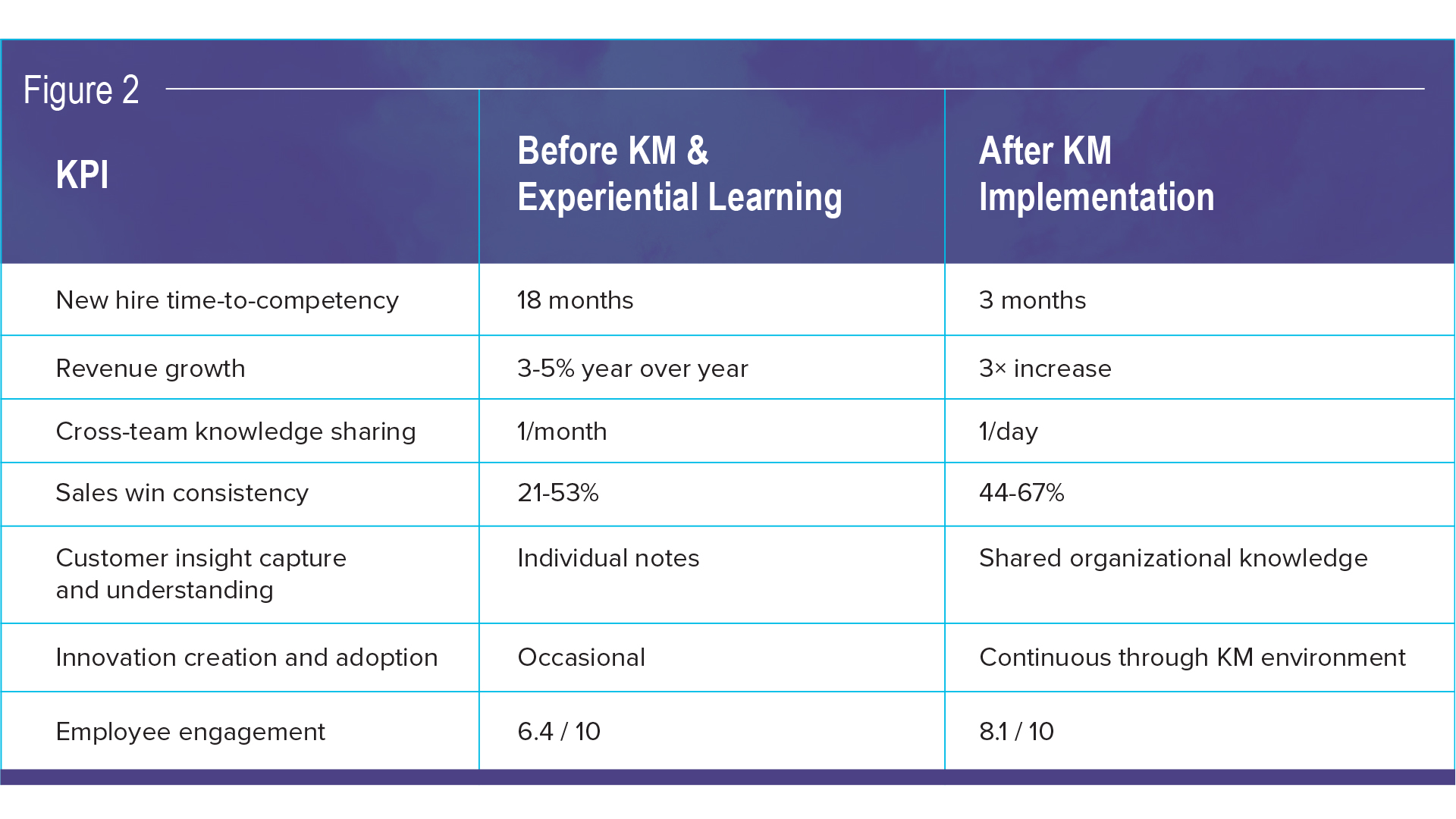
These were the results of an organization that didn’t just improve their training but also built an environment where learning did not stop when training ended.
The Trainer as Knowledge Architect
Overall, training sessions are the starting line where learning begins, not the finish line. KM tools are not complex or expensive, but they do require a shift in how training professionals see their role: not as the trainers who deliver content, but as architects who design the conditions for knowledge to keep moving. When that shift happens, training not only informs people, but, more importantly, it creates learning organizations.