
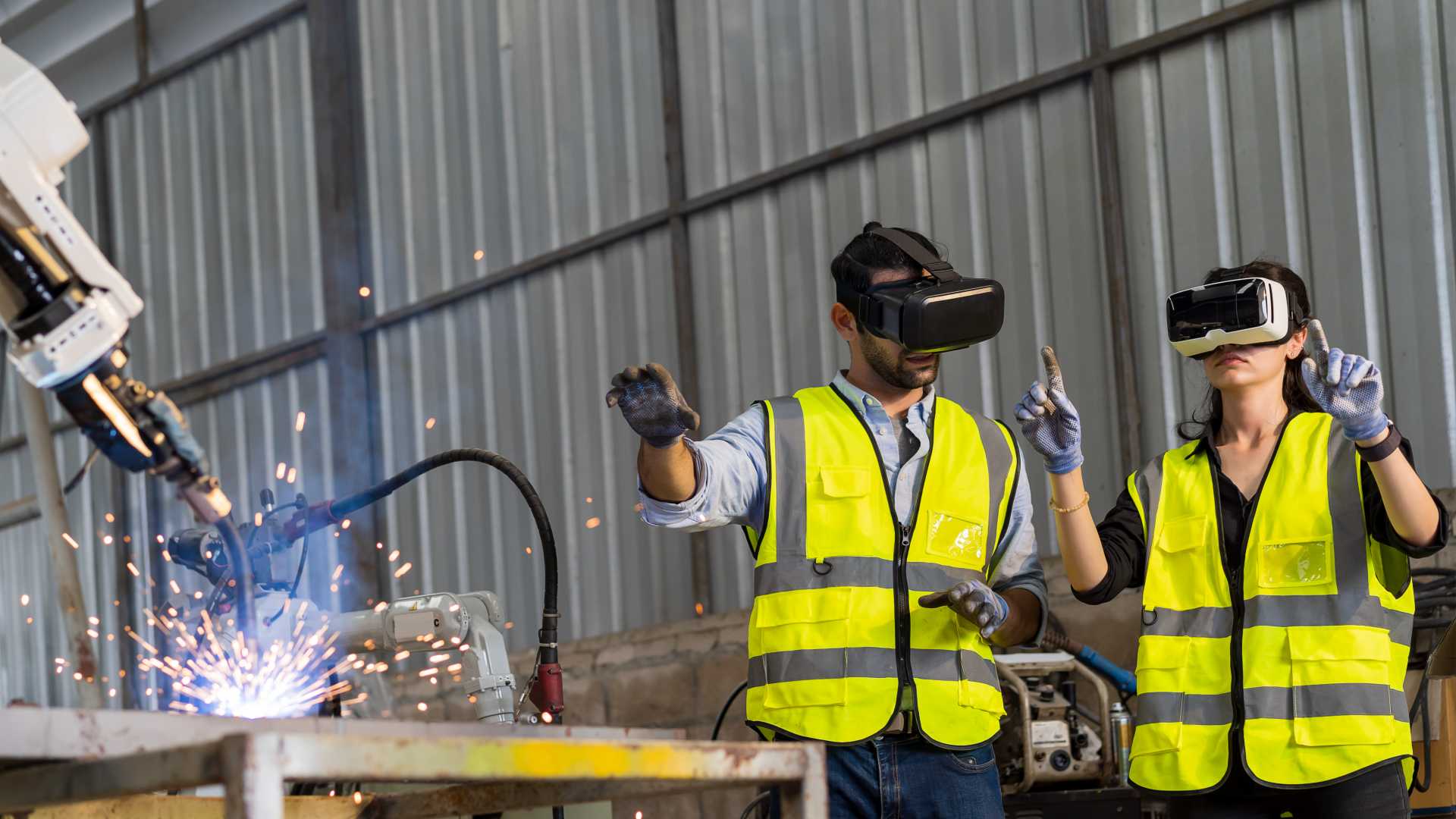
As we move deeper into the digital age, manufacturers are encountering a paradox: Despite revolutionary advances in technology, industry faces its greatest challenge in human capital. The shortage of skilled workers has created an urgent need for innovative solutions that can rapidly transfer knowledge and expertise to a new generation of industrial workers.
GenAI assistants and AI agents are fundamentally reimagining how industrial workers interact with complex systems, access knowledge and develop their skills.
The Power of Generative AI in Industrial Settings
Traditional industrial operations have long relied on a combination of printed documentation, tribal knowledge, and the gradual accumulation of experience. However, as manufacturing generates an estimated 1.9 petabytes of data annually — more than any other industry — the potential for AI-driven support systems has become impossible to ignore. GenAI assistants address this challenge, creating a quantum leap forward in how vast repositories of industrial knowledge can be accessed and applied.
GenAI assistants for frontline industrial work serve as virtual mentors on the manufacturing floor, capable of understanding complex operational contexts and providing instantaneous, relevant guidance. When workers need information about procedures, troubleshooting steps, or equipment specifications, they can simply ask a purpose-built GenAI assistant in plain language and receive immediate, contextually relevant responses. The system synthesizes multiple data sources, connecting to enterprise systems, training databases, and operational data to provide comprehensive answers. For example, when a technician encounters an unfamiliar machine error, a GenAI assistant can instantly generate custom documentation, converting complex technical manuals into clear, step-by-step procedures tailored to that worker’s experience level.
Transforming Workforce Development and Knowledge Transfer
The integration of GenAI assistants into AI platforms for connected frontline work is revolutionizing how industrial knowledge is transmitted and maintained. This innovation is particularly crucial as manufacturers face a potential 2.1 million unfilled jobs by 2030, according to recent studies by Deloitte and The Manufacturing Institute. The impact on workforce development for companies using AI platforms for front-line manufacturing workers is multifaceted and far-reaching.
GenAI assistants analyze individual worker performance data and learning patterns to create customized training programs that adapt to different learning styles and pace. For instance, when onboarding new maintenance technicians, GenAI assistants can generate personalized training paths that focus on their specific skill gaps while providing interactive, scenario-based learning experiences with immediate feedback. The system delivers contextual information based on the worker’s current task, providing real-time translation of technical documentation into accessible formats and offering interactive troubleshooting guidance with immediate access to relevant historical data and past solutions.
AI agents extend this personalized worker support by providing autonomous operations that can take action to proactively address front-line upskills and reskills, workforce capacity shortages or operational risks.
Operational Intelligence and Security
GenAI assistants and AI agents go beyond being a passive knowledge repository; it actively contributes to operational intelligence through sophisticated pattern recognition and predictive insights. By analyzing operational data, these AI systems can identify recurring issues and potential improvements before they become critical problems. For example, when multiple workers encounter similar challenges with a particular process, these assistants can proactively suggest workflow improvements and automatically document successful solutions for future reference.
Security and integration are paramount in industrial settings, which is why it is imperative that industrial AII applications used in front-line industrial settings meet all enterprise-grade security protocols and while ensuring role-based access control. The system integrates seamlessly with existing industrial infrastructure while maintaining comprehensive audit trails for all AI-assisted operations, ensuring that sensitive operational data remains protected while still being accessible to authorized personnel who need it.
The Future of Industrial Operations
AI platforms for manufacturing create a new paradigm for industrial operations. By democratizing knowledge and making expert-level guidance accessible to all workers, we’ve seen new employees become productive more quickly and experienced workers handle complex issues more efficiently through AI-augmented decision-making.
The impact of this technology extends beyond immediate operational improvements. In addition, the technology creates a more resilient workforce by reducing dependency on tribal knowledge and accelerating skill development. Increased worker confidence and job satisfaction is across organizations that have implemented a GenAI solution for industrial work reap benefits including increased worker confidence and job satisfaction, along with improved ability to adapt to new technologies and processes.
The integration of generative AI assistants into connected worker platforms represents more than just a technological advancement; it’s a fundamental shift in how industrial work is performed and supported. As manufacturers face increasing pressure to maintain competitiveness while addressing severe skilled labor shortages, these AI-enhanced systems provide a clear path forward. By combining the power of generative AI with comprehensive connected worker platforms, manufacturers can build more capable, confident, and adaptable workforces ready to meet the challenges of modern industrial operations.


