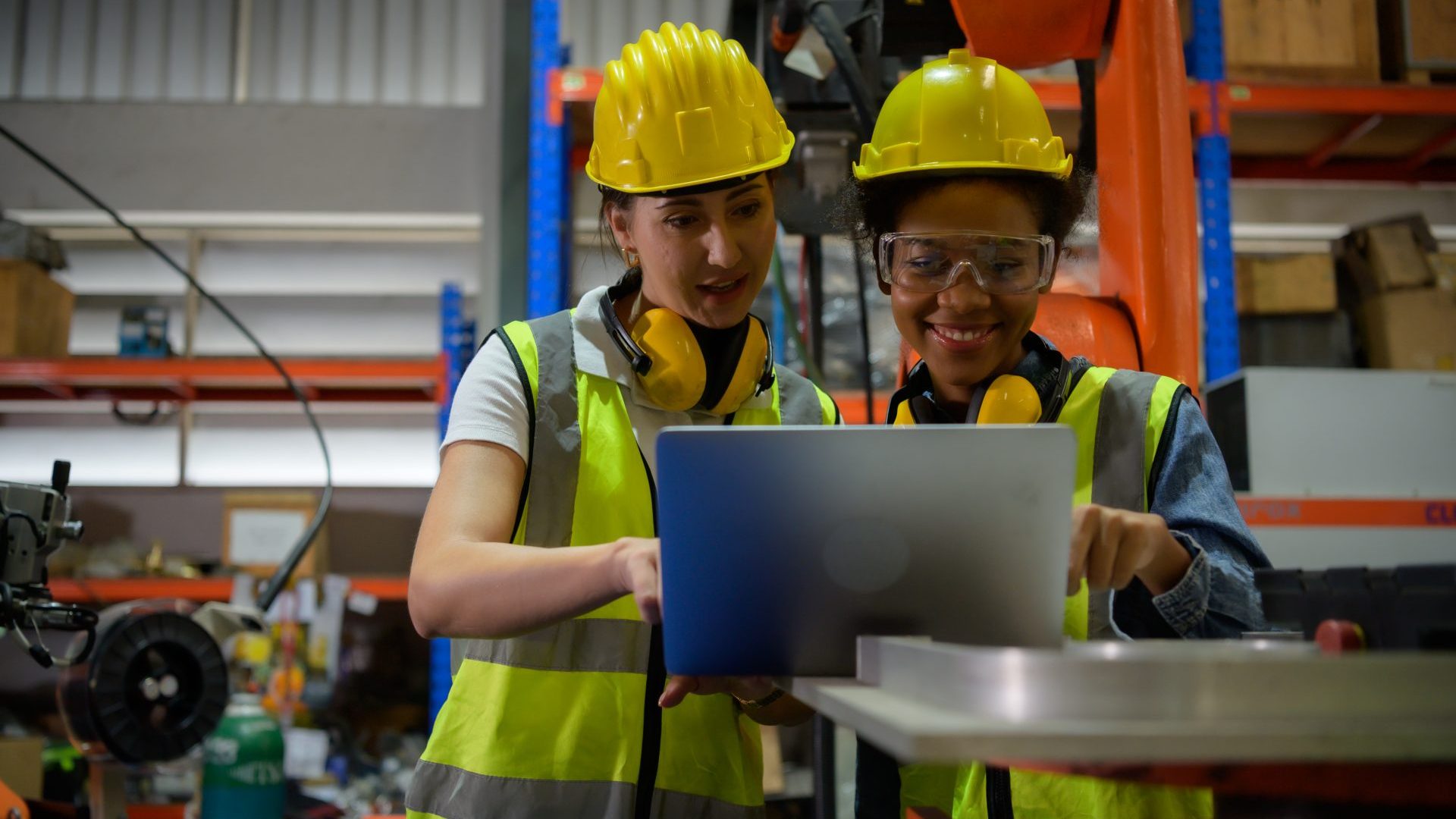
Smart tools alone won’t transform manufacturing. To fully realize the promise of smart manufacturing, the industry must also invest in smarter, more connected teams.
Smart manufacturing refers to the use of digital technologies to link people, machines and processes so work can be monitored, adapted and improved as it happens. Done well, it enables faster decisions, greater flexibility and more resilient operations.
Recent Deloitte research shows strong confidence in smart manufacturing’s potential to create more productive, seamless factory environments. At the same time, workforce challenges tied to agility, skills and resilience continue to grow on the factory floor. As automation accelerates, the critical question becomes: How can manufacturers keep front-line workers empowered while technology reshapes how work gets done?
This is where the connected worker becomes a vital asset, bridging the gap between advanced systems and day-to-day execution, and ensuring manufacturers extract real value from their smart manufacturing investments.
Below are four key areas where success depends not just on adopting new technologies, but on enabling workers to use them effectively.
1. Smart Manufacturing Needs a Human Advantage
Digital transformation is redefining competitiveness in manufacturing. Many organizations now view smart manufacturing as essential to staying competitive over the next several years. But this shift goes beyond automation or the introduction of advanced machinery.
What’s often overlooked is the human element. When workers can’t easily interact with digital systems, the value of even the most sophisticated technology is diminished.
Organizations that align technology with people and processes tend to see measurable improvements in output, productivity and capacity. The real question isn’t about the newest machine capabilities, it’s about connectivity from person to machine to process. One cannot function effectively without the others.
Smart manufacturing is ultimately about people-enabled technology that closes the loop between insight and action. For example, an operator who identifies a quality issue can scan a QR code to access a product or equipment history, watch a short instructional video, log the issue and notify maintenance — all without disrupting supervisors or slowing production. This kind of connectivity allows front-line workers to build skills independently while keeping operations moving.
2. Closing the Skills Gap Starts on the Front Line
Manufacturers continue to face growing challenges in filling production roles and planning for future talent needs. Workforce demographics are shifting, while technology systems and workflows are becoming more complex.
Connected workers play a critical role in addressing these pressures. When knowledge is digitized and made accessible, staffing challenges can be reduced and institutional expertise can be retained even as experienced workers retire or move on.
Traditional approaches like classroom training or shadowing are no longer sufficient on their own. Connected worker tools transform tribal knowledge into accessible, bite-sized resources such as short training videos and digital work instructions that are available to every role, at the moment of need.
With the right tools in place, workforce development shifts from being a bottleneck to a competitive advantage. Onboarding and training become more consistent, error rates decline and workers gain confidence in navigating both their roles and the technologies that support them.
3. Solving the “Last Mile” Problem on the Shop Floor
Many smart manufacturing investments focus on infrastructure — automation hardware, sensor technologies and vision systems that form the backbone of modern industrial environments. While essential, these tools also introduce a critical challenge: the last mile.
In manufacturing, the last mile is the gap between data generation and front-line production. Machines may generate real-time performance metrics, predictive analytics and fault alerts, but those insights only matter if they reach the right people at the right time and are acted on consistently.
Connected worker solutions help close this gap by making data usable on the shop floor. They empower supervisors and operators with timely insights through dashboards, reports and integrations with enterprise systems, improving collaboration and response times.
Artificial intelligence (AI) and generative AI can further enhance this loop. As more data is captured in structured formats, these tools can help surface patterns, suggest fixes or even generate training content. Their value, however, depends on how well they support human decision-making. The interface and the worker experience matters as much as the intelligence behind it.
4. Governance as a Driver of Agility, Not a Constraint
As manufacturing environments become more autonomous, governance, risk and compliance take on greater importance. Operational risk mitigation, cybersecurity, workforce adoption and data management are increasingly top of mind.
As systems scale, so does complexity. Without clear governance, the risk of inconsistency, non-compliance or unsafe practices rises sharply. Modern connected worker solutions help address this by embedding governance directly into daily operations.
Standard operating procedures can be clearly defined and enforced digitally. Training completion can be tracked, updates version-controlled and digital sign-offs recorded. This creates transparency while ensuring workers always have access to the most current guidance.
In an environment shaped by supply chain disruptions, geopolitical uncertainty and workforce turnover, agility is essential. With connected worker platforms, changes can be rolled out quickly across lines, shifts and even global sites, turning governance into a catalyst for resilience rather than a barrier.
The Real Endgame: An Empowered Front-Line Workforce
As manufacturers look ahead, smart manufacturing is now a requirement for modernization and long-term competitiveness. But success isn’t driven by automation alone.
The next wave of smart manufacturing will be led by connected teams — workers who are supported by technology, trusted with insight and equipped to continuously improve how work gets done.
Whether organizations are digitizing training, standardizing procedures or integrating real-time data into workflows, the goal remains the same: to build a culture of continuous improvement powered by the people on the front line.
The future of smart manufacturing isn’t fully autonomous. It’s human-led, technology-enabled and built on smarter teams.