

Picture this: A customer is screaming at you in frustration. What do you do?
This is a decision front-line employees are forced to make almost every shift. Challenging customers have always been a problem for people working in retail, food service, contact centers and other front-line roles. Today, incivility is the biggest problem front-line workers face according to the 2024 Deskless Report from Axonify.
Recent research on front-line incivility reveals that only 1% of employees managed to avoid such encounters in the past year. Meanwhile, 72% report dealing with customer incivility at least once a week — and 65% believe the problem is only getting worse.
Incivility takes a toll on everyone. It leaves employees feeling frustrated and unsafe. It stifles performance as workers focus on avoiding conflict rather than delivering great customer experiences. And that’s just the beginning. This article reviews the implications of incivility on the front-line workforce, and how targeted customer service training can equip them to overcome this challenge.
The High Cost of Incivility
Difficult customers can be more than an unfortunate annoyance. In many cases, they’re a serious drain on financial results. According to research by Society of Human Resources Management (SHRM), “Incivility is Costing Workplaces Billions,” the 8.7 million acts of incivility that occur every hour cost organizations $2.1 billion in lost productivity and absenteeism per day. Unsurprisingly, researchers have also found that repeated exposure to customer incivility contributes to higher turnover intentions and, as a result, increased recruitment and training expenses.
Front-line incivility is a complex challenge that demands a comprehensive solution. Organizations must establish clear, consistent and actionable policies to set expectations for behavior and guide employees through difficult situations. For example, many companies are adopting tools like radios, panic buttons and body cameras to give front-line workers immediate support when/if incidents occur.
But policies and tools are just a start. Effective training is essential to ensure employees feel capable and confident when faced with difficult customers. While de-escalation training is common, with 75% of surveyed front-line employees saying they’ve completed it, more than one-half of employees still freeze up in the moment. This data means that traditional courses, often delivered during onboarding, are falling short. To truly empower your front-line, it’s time to revisit how your learning practices can better prepare employees for the challenges they face every shift.
Keep it real.
You’re a cashier at a fast-food restaurant. A customer angrily complains that their favorite menu item is no longer available. They demand to know why it was discontinued.
How should you respond?
- “I understand your disappointment. While that item is no longer available, we’re excited to offer a variety of innovative new menu options. I’d be happy to recommend something that aligns with your tastes!”
- “Well, nothing lasts forever! Our menu changes all the time, and we’re sure you’ll find something else you can tolerate.”
- “It wasn’t my decision. I just work here, so there’s nothing I can do about it.”
Option 1 is clearly the “correct” answer — it’s the longest and full of corporate jargon. Option 3, however, is what many employees are more likely to say in real life. That’s because customer service training, whether delivered in a classroom, through eLearning or even virtual reality (VR), often reflects what corporate wants to happen rather than what actually takes place on the front-line. It’s not just ineffective — it’s disrespectful. Training that ignores the reality of these interactions can leave employees feeling unheard and unprepared.
Effective incivility training needs to be honest, practical and firmly rooted in the everyday experiences of front-line workers. That doesn’t mean subjecting employees to extreme, profanity-laced scenarios — HR wouldn’t love that! But it does mean working with front-line employees to gain an understanding of the concrete challenges they regularly navigate. What kinds of frustrations are customers expressing? How do they respond to changes like new products or policies? Build training that reflects these realities and offers clear, actionable strategies employees can use in the moment.
Focus on people, not policies.
Clear, consistent policies are essential for dealing with difficult customer situations. Employees need to understand where the line is drawn regarding unacceptable customer behavior and what steps to take when that line is crossed. But policies alone won’t solve the problem.
Incivility isn’t a process problem. It’s a people problem. These situations ripple through the workplace, impacting those directly involved, those who witness the situation and even those who hear about it later. Dealing with frustrated, angry, aggressive customers can be overwhelming. It doesn’t take much to trigger people’s natural fight-or-flight response, causing even experienced employees to make poor decisions under stress. This emotional hijacking puts the employee and those around them at risk.
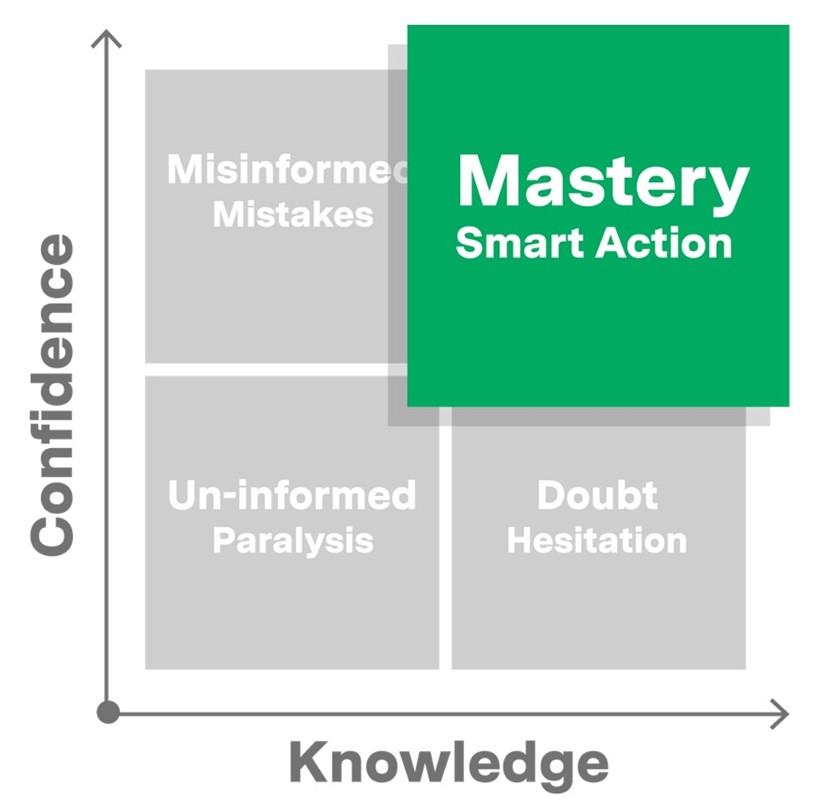
Effective incivility training should go beyond policy. Instead, the training should equip employees with the self-awareness needed to recognize and manage their emotions in the moment. Employees must understand how stress can impact their decision-making, and as a result, develop practical strategies to stay in control during difficult situations. With both the knowledge (policy) and the confidence (self-awareness) to respond appropriately, they can be prepared to make the right decision when it matters most.
Reinforce, reinforce, reinforce.
It’s not just what you cover in customer service training that matters — it’s when you cover it.
Customer service is a priority in front-line businesses, so it’s often one of the first topics explored during onboarding. However, with so much happening in those first few days and weeks — from schedules and dress codes to meeting new coworkers and managers — how much of that training do employees actually remember? No wonder, 52% of front-line workers struggle to recall what to do during challenging customer interactions, according to the Axonify report.
Addressing customer incivility requires continuous reinforcement. Employees need opportunities to apply what they’ve learned in a low-pressure environment before facing the real thing. This doesn’t have to get complicated. A well-rounded frontline learning strategy includes multiple methods for sharpening key skills like customer service:
- Scenarios. Deliver two to three brief, targeted questions via mobile push notifications at clock-in to reinforce strategies for handling difficult customer interactions.
- Huddles. Share success stories of how front-line peers handled tough customers to reinforce key behaviors during pre-shift meetings.
- Managers. Encourage managers to reinforce key behaviors through on-the-job observation and coaching.
- Resources. Ensure employees they can quickly access answers to common customer questions to avoid “I don’t know” moments.
Reinforcement builds readiness. With regular practice and support, employees gain the confidence and capability they need to handle even the toughest customer interactions.
Your front-line workers are in need of help.
Customer incivility is an everyday challenge, and frontline employees are asking for help. Forty-four percent want more training on how to handle conflict. They need practical, relevant, people-centered support that empowers them to skillfully handle tense customer exchanges.
This isn’t just a box to check. It’s a responsibility. The frontline deserves better. Is L&D ready to step up?


