

Sales teams are often siloed from other parts of the business. This can lead to sales teams lacking the means to acquaint themselves with product features prior to launch. This can sometimes result in uncomfortable scenarios where customers inform us about new features instead of the other way around. However, with sales enablement as a critical filter, learning and development (L&D) can sift through the deluge of launch information and deliver precisely what sales reps need to promote the new product.
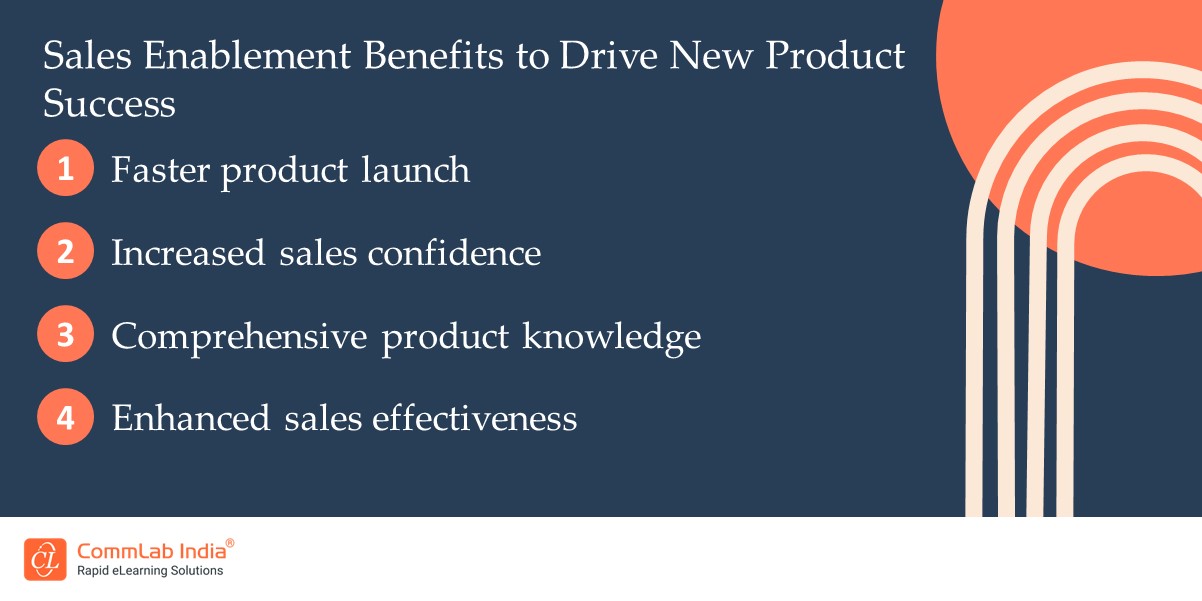
Let’s explore some ways in which sales enablement can help drive new product success.
Assess the Complexity of the New Product
Evaluating the complexity of a new product is a pivotal aspect of sales enablement during a launch. The new product should be considered from the angles of both sales representatives and customers. This process begins with a thorough understanding of the product’s technical intricacies and its potential impact on customers. Sales teams must be well-versed in the product’s functionality, benefits and how it compares to competitors. This assessment helps in creating tailored training materials and objection-handling strategies. Furthermore, anticipating potential challenges that come with product launches equips sales representatives to confidently present the features of the new launch to customers. By carefully evaluating the product’s complexity, sales enablement ensures that the sales force is armed with the knowledge and tools needed to sell the new product effectively.
In practice, this assessment of complexity results in the development of sales resources that simplify the new feature’s value proposition, making it easier for sales reps to convey its advantages to customers. It ultimately ensures a smoother and more successful product launch, where the sales team is well-prepared to address any technical questions and confidently demonstrate how the new feature aligns with customer needs. Here are some key aspects to remember:
- Ensure sales teams grasp the product’s functionality and its customer benefits.
- Evaluate the technical aspects and integration requirements.
- Compare against competitors for unique selling points.
- Identify real-world applications and benefits.
- Provide resources for compelling demonstrations.
- Prepare for common objections and questions.
- Develop guides outlining benefits.
- Equip reps with resources for support.
Determine the Potential Opportunity or Risk
Assessing potential opportunities and risks in sales enablement for a new product launch is vital. This involves anticipating opportunities that can lead to successful product adoption and identifying potential risks that could hinder the launch’s effectiveness.
Here are some key considerations:
- Evaluate the size of the market and the demand for the new product.
- Understand the competitive environment.
- Assess how well the product aligns with customer needs and pain points.
- Consider the timing of the launch in relation to market trends and customer buying cycles.
Ensure that the sales team is adequately trained and informed. - Anticipate potential objections from customers and have strategies to address them.
- Establish a feedback system to collect insights.
- Identify any compliance or legal issues that could pose risks.
- By carefully analyzing these opportunities and risks, sales enablement can better prepare the sales team to navigate the product launch, maximize opportunities and mitigate potential challenges.
Make a Smart Choice With Your Sales Enablement Activities
1. Product Walkthroughs
Product walkthroughs can equip the sales team with an in-depth understanding of the product’s capabilities and benefits, as well as how it addresses customer needs. During the walkthrough, sales representatives gain hands-on experience, engage in live product demonstrations and can ask questions and seek clarifications. By focusing on real-world use cases and competitive comparisons, the walkthrough empowers the sales team to effectively position the product, address objections and emphasize its unique selling points. It’s a foundational step in ensuring the success of the product launch and the confidence of the sales force in promoting the new offering.
2. Workshops With SMEs
Conducting workshops with subject matter experts (SMEs) is a highly effective sales enablement activity for a new product launch. These workshops provide sales teams with direct access to experts who possess deep knowledge about the product and its industry applications. During these sessions, reps can dive into the product’s intricacies, ask specific questions and gain insights into how the product addresses customer challenges. This interaction fosters a strong product understanding, enabling sales teams to articulate the value proposition with the confidence and precision needed to drive the success of the product launch.
3. Mobile Learning and Microlearning
Leveraging mobile learning and microlearning as sales enablement activities for a new product launch can offer a flexible and dynamic approach to equipping the sales team. Mobile learning allows reps to access training materials on the go, ensuring they can continuously update their knowledge. Microlearning, with its bite-sized content, delivers key information concisely and memorably. This combination caters to modern, busy sales professionals, enabling them to efficiently digest essential product knowledge in short, focused bursts. It ensures that the sales team is always well-prepared to engage with customers and effectively communicate the value of the new product, contributing significantly to the success of the launch.
The Path Ahead
Sales enablement allows a strong, cross-functional approach to product launch. It ensures that quality content is created and made available prior to product launch. The more self-assured and independent the sales team, the greater their contribution to successful product launches.
So, arm your sales teams to assert their authority over your product, conquering every challenge that comes their way!
Want to learn more? Watch this video: Sales Enablement Training to Overshoot Targets


