Role-playing is a widely used tool for managers and trainers to help learners master difficult conversations. Yet, despite its potential benefits, many people dread it. Why? The answer often lies in how role-playing is traditionally implemented. Awkward public settings, the dreaded “fishbowl,” fear of failure and performance anxiety can turn what should be a valuable learning experience into a demotivating ordeal.
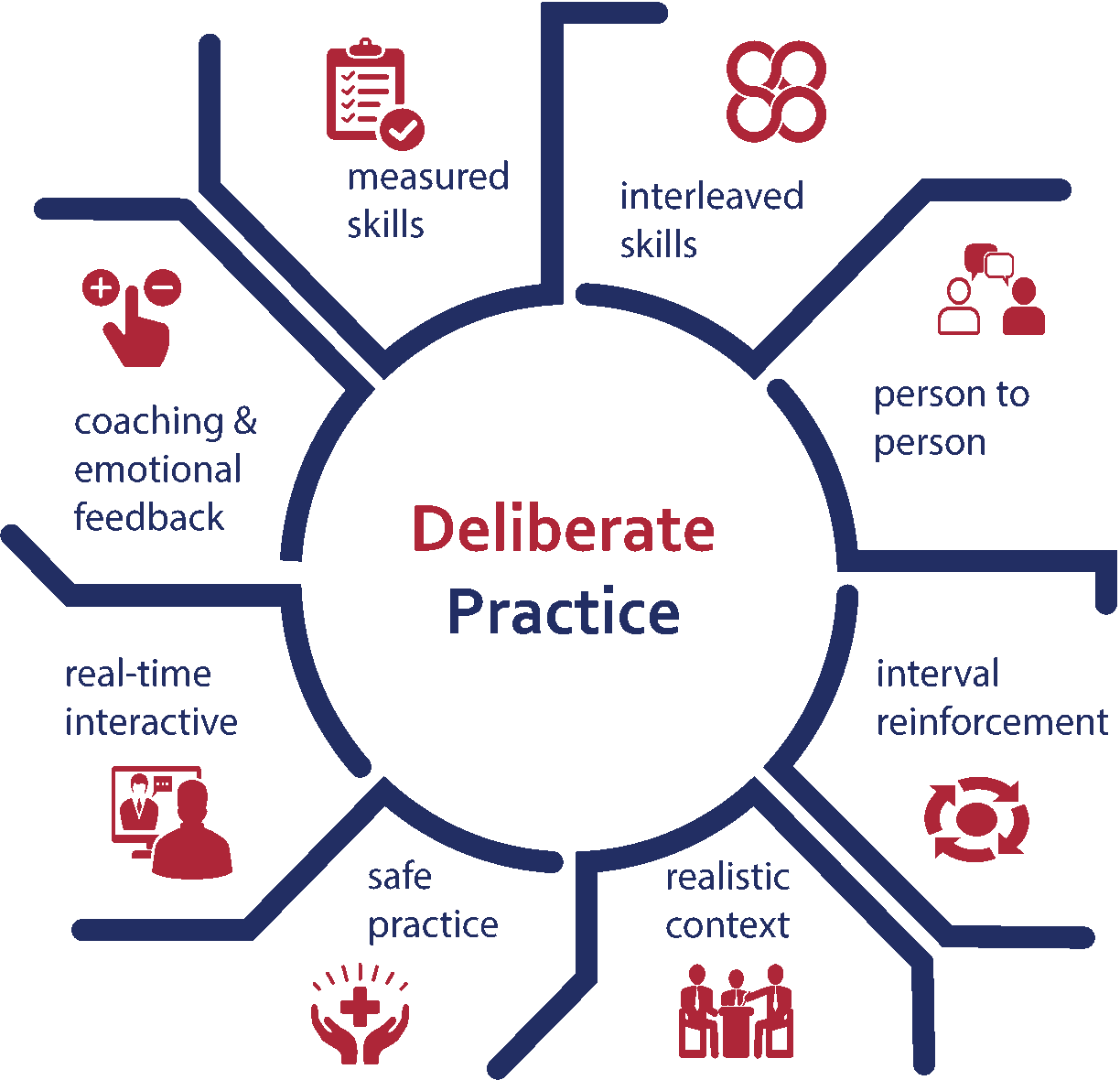
Learning designers understand that mastering high-stakes dialogue requires more than theoretical knowledge. It demands structured, deliberate practice, and hands-on rehearsal in a controlled environment. Deliberate Practice, a methodology pioneered by Dr. Anders Ericsson, emphasizes focused, measurable efforts to learn new skills. I’ve taken this research and adapted it specifically for crucial business conversations.
Two critical components of this approach are a safe environment and measured skills development, elements that traditional role-playing often struggles to provide. In many workshops, learners are asked to role-play in front of managers or peers, or even in a fishbowl setting where everyone is watching. Failing in such a public environment can be discouraging, undermining both confidence and motivation. Adding performance measurement to the mix can make the process feel more like a test than an opportunity to grow.
Solving Common Role-Play Challenges
Creating private, customized practice scenarios facilitated by professional role-play coaches and artificial intelligence (AI)-powered avatars can help solve common role-play challenges.
Delivered virtually, one-on-one sessions allow learners to “fail forward” without judgment. Skills and behaviors are measured objectively but not publicly shared, helping participants build competence and confidence. This structure is particularly effective for developing sensitive skills like empathy, tone and style, all critical qualities for navigating delicate conversations.
Moreover, third-party measurement capabilities minimize bias, offering organizations a more accurate representation of performance across their teams. Data gathered from these sessions reflects learners’ actual skill levels and highlights areas for improvement in a realistic, actionable way.
Customizing scenarios to reflect the learner’s real-world challenges is another key success factor. When participants recognize their own contexts in the training materials, engagement skyrockets. Realistic simulations combined with immediate, targeted feedback ensure that the lessons learned stick and translate into tangible results.
The intensity and relevance of these tailored practice sessions leave lasting impressions. When learners encounter similar challenges in their day-to-day roles, they can draw on their deliberate practice experience with confidence and clarity.
From Awkward to Effective: Rethinking Role-Play
While role-playing with a manager or mentor can be a valuable part of professional development, it is best seen as a complement to structured, Deliberate Practice delivered in a safe, supportive environment. By removing the barriers that make traditional role-playing uncomfortable and often ineffective, organizations can empower employees to master difficult conversations and foster stronger, more effective communication.
Role-playing doesn’t have to be avoided or cause stress. When designed thoughtfully and delivered through AI-driven technology or skilled facilitation, it becomes a transformative tool for building the skills that matter most.