
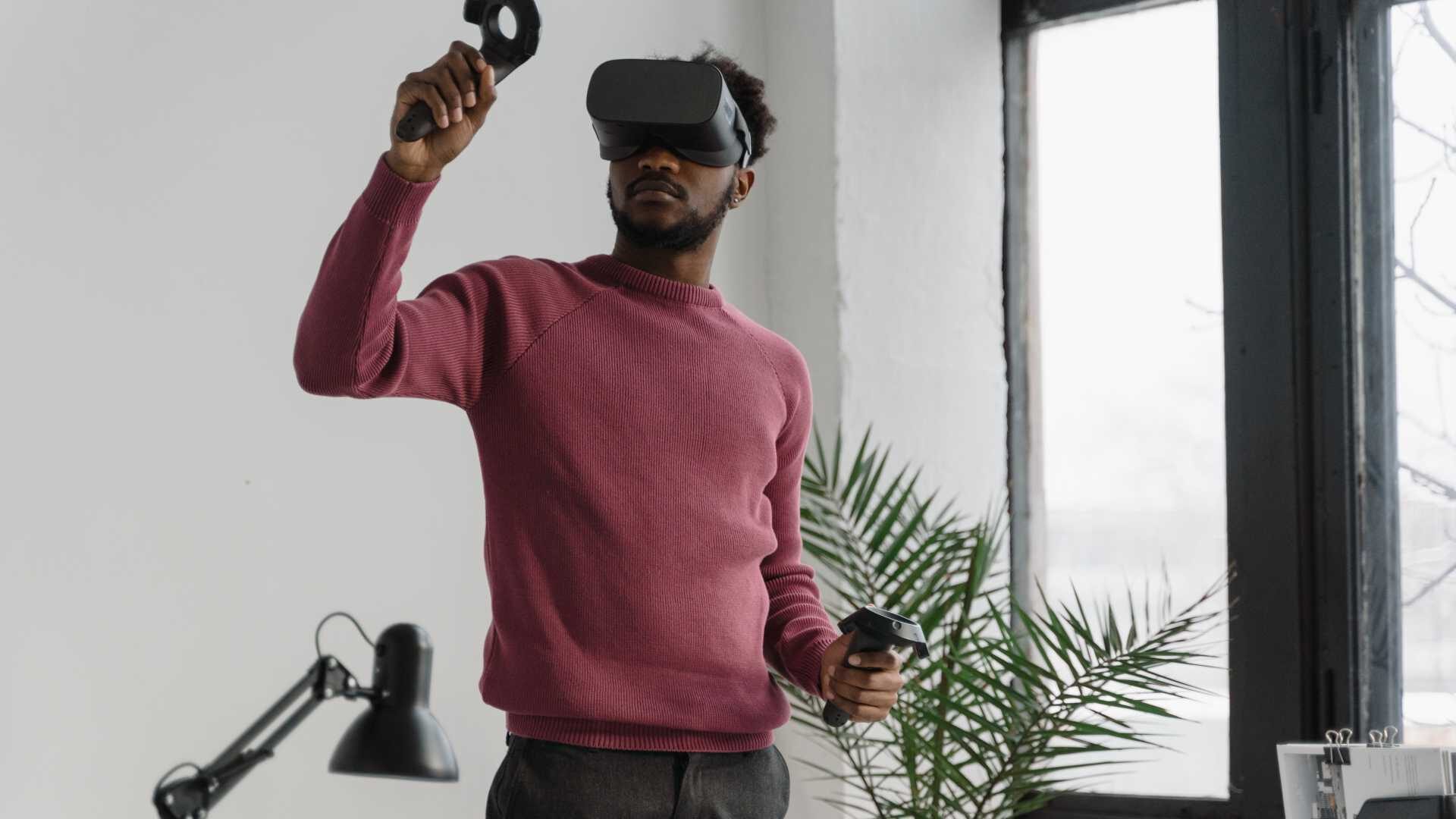
You’ve likely heard it a thousand times — today’s employees aren’t engaged. With The Great Resignation, “quiet quitting,” and frequent job-hopping dominating headlines as of late, many employers are feeling pressed for ways to keep their most valued employees aboard and engaged, all while operating in largely hybrid and remote environments.
While some high-profile business leaders have taken the tack of mandating employees return to the office, most experts are quick to warn against the strategy — seeing it as a surefire way to sow discontent and push high-value employees out the door and into competitors’ ranks.
Unsurprisingly, many business leaders today bemoan technology as the wedge that’s splintered their corporate culture into a thousand, remote, work-from-home pieces. But, as is almost always the case with new and disruptive technologies, resistance is a losing battle. So, rather than rage against the rising tide of remote-enabling technologies, business leaders would be wise to embrace them — turning these tools against the scourge of disengagement and reigniting a sense of purpose and belonging among employees.
VR Technology Has Arrived
One cutting-edge technology in particular is showing immense promise in the fight against employee disengagement, and is doing so without challenging today’s remote-first prerogative. That technology is virtual reality (VR). VR technologies have been around for quite some time. However, for most of its existence, VR was simply too clunky and cumbersome to see widespread adoption outside of niche gaming communities. In its early days, the average VR experience required the user to wear a comically large headset connected by a nest of wires and remote sensors attached to six-foot poles. And even then, the visual experience left a lot to be desired.
Today, however, VR has reached a critical threshold, in which the hardware has become lightweight, comfortable and accessible enough for more widespread adoption, and the software is following suit. Add to this the tidal wave of interest in the Metaverse fueled by Facebook’s rebranding as Meta, and we find ourselves at a truly transformative moment for the field of VR. And while there’s certainly room for improvement across the board — especially as it relates to graphic fidelity and headset size — the VR market has expanded by leaps and bounds in recent years.
In fact, the number of installed VR headsets worldwide has more than doubled from just 17 million in 2019, all the way to 35 million in 2022. And current estimates expect that figure to double once again to reach 70 million headsets worldwide as soon as 2026. And still, it would be fair to say that VR is still in its infancy, with immense potential left to be tapped into.
L&D Fuels Engagement
It’s hardly news that on-the-job training and upskilling are invaluable practices for increasing employee productivity and engagement. This has been a widely studied phenomenon for some time, with researchers finding that organizations engaged in employee development see improved retention rates. In fact, 94% of employees say they will stay longer with a company that invests in career development.
Additionally, businesses that invest in training and development see lower absenteeism rates, higher productivity and even see greater success in the marketplace, with organizations that invest in training and development seeing, on average, double the profits compared to organizations that do not.
Additionally, there are reasons to believe that the impact of learning and development (L&D) is only growing. In the wake of the COVID-19 pandemic, the workforce experienced a significant reshuffling of employees’ priorities, with quality of life and meaning-based metrics surging in importance, and fiscal considerations cooling off. In fact, in a recent report from Glint, employees ranked “having opportunities to learn and grow” as the number one factor that defines an exceptional workplace — up all the way from ninth place in 2019.
Immersion, Interactivity Give VR a Leg Up Over Traditional Training
So, it should go without saying that training and development are powerful tools for driving employee engagement. However, anyone that has been trapped inside a drab conference room watching hours of poorly shot training videos can tell you that not all workplace training programs are created equally.
While most readers will likely intuitively understand that an immersive, interactive training experience will be more enjoyable than a passive one, research has shown that the benefits go well beyond mere novelty or entertainment factor. For example, educational experiences that engage more of our senses (e.g., tactile, visual and auditory) lead to better retention of information and more effective learning. What’s more, VR training ensures a much wider range of learning preferences are met.
Given today’s VR technology, users can do just about anything they could do in a real, face-to-face experience — including navigating virtual spaces, interacting with objects and collaborating with others — plus a whole lot more. VR training allows for near limitless creative possibilities, all the efficiencies and cost-saving of a digital platform, plus massive environmental and societal benefits.
Overcoming Barriers With VR Training
The only constant in business (and life) is change. And with today’s breakneck pace of technological advancement, it is certain that the working world will be vastly different in just 10 or 20 years’ time. As new technologies and new socio-political realities take shape, it will be imperative for organizations to reskill, upskill, and train both new and existing employees — or else fall behind.
According to the OECD, over 1 billion workers will need to be upskilled by the year 2030. Meanwhile, research done by the World Economic Forum in collaboration with PwC found that investment in reskilling and upskilling of the current global workforce has the potential to boost GDP by $6.5 trillion in the same timeframe.
What’s at stake couldn’t be clearer. The question, then, is how do we do it? With VR, corporate training is hybrid, accessible, cost effective, and engaging by design and by default. Already, some Fortune 500 companies are capitalizing on the very real benefits of VR training and seeing increased employee engagement as a result. And, with VR technology still very much in its infancy, the only way for this exciting new movement to go is up.


