For decades, the combination of augmented reality (AR) and smart glasses has promised a revolutionary new way to live and work. Yet the public conversation has been dominated by a consumer-focused narrative with futuristic products and lengthy development cycles that have struggled to prove their value for daily life.
In reality, crucial industries like healthcare, defense, manufacturing and logistics have been at the forefront of implementing AR technology like smart glasses, resulting in meaningful increases in efficiency, accuracy and safety. In our customer pilots and deployments, we’re seeing up to 40% faster order fulfillment in the warehouse and over 50% reduction in operating time. With workplace AR, employees can onboard, upskill and practice dangerous or complex procedures guided by data that’s available at a glance or a voice command away.
It’s impossible to overstate the impact that artificial intelligence (AI) is having on the industrial AR industry, which allows for customized programs to be used on smart glasses and function as onboard assistants, trainers, and concierges all in one. Where once we needed to wake up or summon virtual assistants like Siri on our phones, AI agents now can see what you’re seeing and anticipate moments of need. Clearly, the question for every organization is no longer about the technology’s potential, but about its immediate, practical application, and more specifically, the kinds of enhanced capabilities that AI-driven smart glasses can endow employees with from their very first day.
Technological Maturity of AI-Enabled Smart Glasses
For years, AR smart glasses were defined by bulky form factors and inflated promises that didn’t mesh with the promise set forth by Hollywood. Today, following years of innovation, the reality of the market is coming closer to those expectations. Lighter materials and advanced engineering have made smart glasses more comfortable and visually appealing.
To that end, display technology has advanced significantly, offering higher resolutions and wider fields of view that make digital overlays feel genuinely integrated and user friendly. As AI-assisted agents become entrenched in our day-to-day experiences, these improvements will be essential to their use and the acceptance of AR/AI glasses overall.
Practical Applications of AR Wearables in the Workplace
In addition to the capabilities of AI smart glasses for in-person work, the shift toward remote and hybrid work has created a demand for new tools that enable collaboration and training regardless of physical location. AI smart glasses can fill in gaps by providing a shared visual context for employees. They allow for hands-on training from a distance and make expertise accessible across an entire organization, reducing costly travel and allowing for faster problem solving.
While most technology implemented in the workplace, such as new software programs or operational processes, require extensive onboarding time, smart glasses are designed to be seamlessly integrated into existing protocols. L&D teams can create guided workflows to reduce training time for new hires and ensure consistency across the workforce. A step beyond that, AI agents can also create custom tailored training based on real-time performance, providing the worker with training that is specific to their areas of need.
Here are a few examples of how specific industries are implementing AR technology to improve efficiency and outcomes:
Warehousing
AI-enabled smart glasses are enhancing warehouse operations by providing an improved onboarding experience for new employees, offering real-time decision-making support, and instantly connecting workers to supervisors and inventory management systems. By offering a hands-free solution for tasks like order picking, palletizing and delivery, smart glasses help workers maintain a high level of accuracy and boost overall performance. They also promote a safer and more productive workplace by freeing the worker’s hands, recording training videos and providing new employees with instant performance feedback.
Healthcare
AI-enabled smart glasses are providing medical professionals with hands-free access to critical information. These devices allow for real-time monitoring of patient vitals and sensitive data directly within the user’s line of sight, which is crucial for maintaining a sterile environment during surgery. The technology also facilitates knowledge-sharing and collaboration through live, high-definition streaming and video conferencing, enabling instant expert feedback for training and remote consultations. AR is also being used in telemedicine, allowing for remote care and instant sharing of expertise globally.
Manufacturing
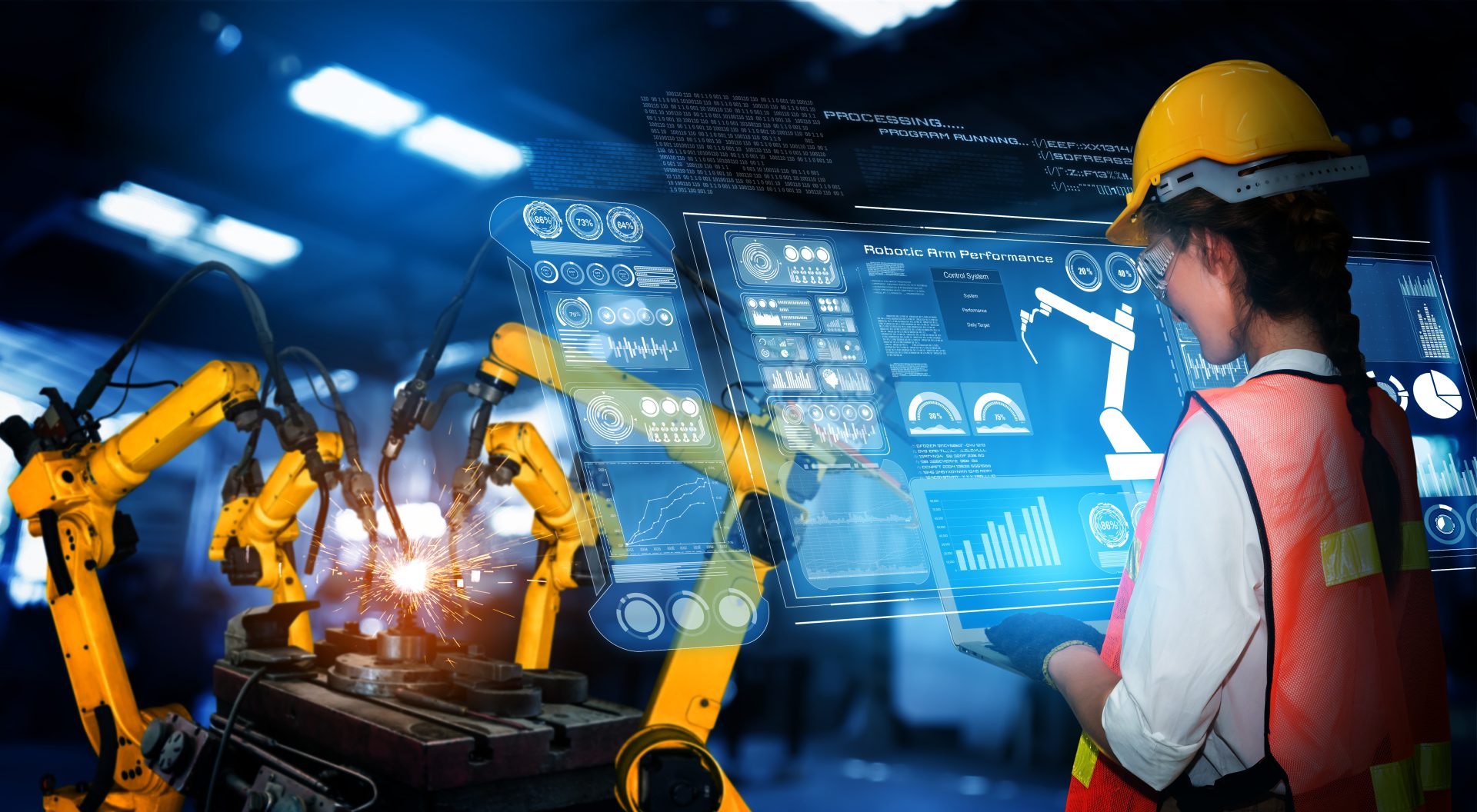
Smart glasses can provide workers in manufacturing with hands-free, voice-controlled access to essential information, such as step-by-step instructions, diagrams and real-time data overlaid directly onto their field of view. This helps accelerate production timelines, reduce errors and ensure compliance with protocols, which is critical for complex assembly tasks and quality assurance. AI smart glasses also help simplify employee training and reduce costly downtime by enabling workers to access real-time machine data and connect with remote experts for live support, making repairs and maintenance faster and more efficient.
The AI-Enabled Future Is Here
The combination of technological maturity, falling costs and workforces searching for AI-enabled solutions has brought us to a point where smart glasses are no longer a futuristic concept but a viable, high-impact enterprise tool. The question for forward-thinking organizations is no longer if smart glasses will play a critical role in the future of work and learning, but when and how you will integrate them to take advantage of the huge opportunities presented by AI-connected workers.