
Building resilient leaders is more important than ever. Resilient leaders focus not only on their own impact and productivity, but also on employee engagement and giving employees the tools to be resilient, thrive and move forward in the face of challenges. Resilience enables leaders to have fulfilling careers and lives and avoid burnout.
It’s important to recognize that “leaders” are not necessarily defined by a job title. Leaders are high-potential individuals who embody the organization’s vision, inspire their teams and generate trust.
One way to develop resilient leaders is through leadership coaching. With leadership coaching, leaders:
- Understand their natural leadership type.
- Enhance their leadership skills.
- Improve their emotional intelligence and understand its impact on performance.
- Set themselves up for continual performance improvement.
The organization benefits because resilient leaders:
- Improve their working relationships with peers and direct reports.
- Increase their communication effectiveness.
- Enhance their ability to manage conflict.
One framework for developing resilient leaders is the Benatti Resiliency Model®. This model consists of five strategies: well-being, self-awareness, brand, connection and innovation.
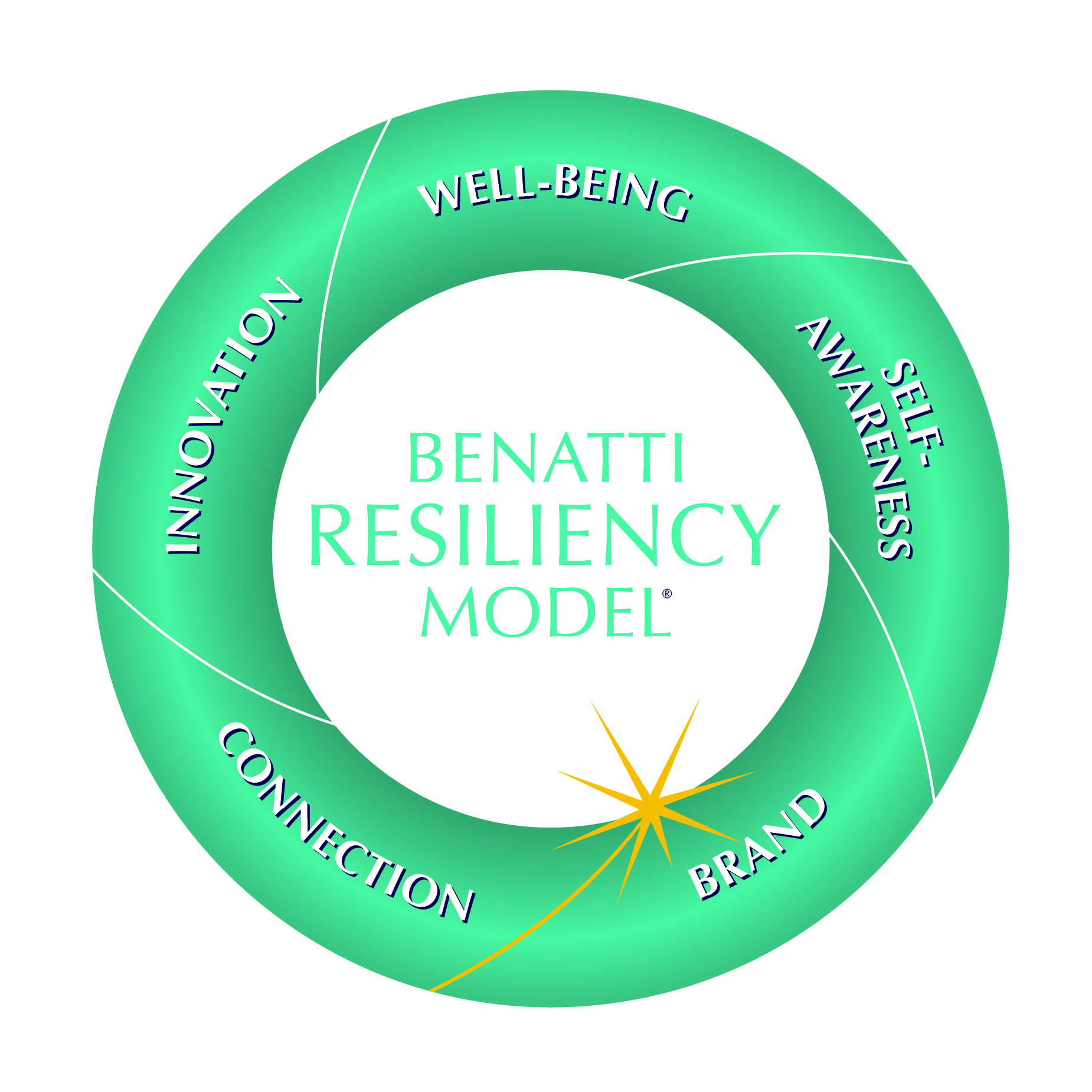
Let’s explore this model in more detail.
Well-being:
Leaders must prioritize their physical and mental health to ensure they are in the best state to face challenges. This includes a healthy work-life synergy, having access to wellness programs, and engaging in regular physical activity and mindfulness practices.
Self-awareness:
Leaders must understand their strengths, opportunity areas and emotional responses to better navigate workplace dynamics. Tools such as personality assessments, regular feedback sessions, and personal reflection exercises can enhance a leader’s self-awareness. Taking time to think about one’s purpose can be extremely motivating as well. The more a leader has this understanding, the greater impact they can have on their employees.
Brand:
Leaders need to develop a strong personal and professional brand that reflects their values and goals. This gives them an opportunity to make an impact in their organization in an authentic way.
Connection:
Leaders need to build strong relationships within the organization to foster a sense of community and support. Techniques to achieve this include informal team-building activities, lunch-and-learn programs and keeping communication open.
Innovation:
Leaders can get stuck focusing on all the urgent issues taking place and sometimes this can lead to burnout. It is important for all leaders to promote creativity and encourage employees to do the same — to find novel solutions to problems and embrace change.
An innovative leader normalizes failure so that employees are comfortable exploring out-of-the-box solutions to problems. Leaders can also support the introduction and use of platforms for idea sharing and create an environment where risk-taking is supported.
Two essential factors in leadership coaching are:
1. Intake interviews and assessments to identify what’s working and what needs to be improved. With these assessments providing insights and data, the leader can clarify development priorities and coaching goals and create a customized action plan that focuses on key improvement areas and supports greater success at work.
2. A post-engagement meeting in which the participant and manager review progress and clarify the commitment needed to reinforce changes and continued development.
Conclusion
In an ever-changing business environment, resilience is not just a desirable trait but a necessary business competency.
Resilient leaders can transform your organization because they have the skills to thrive amidst challenges, can foster a supportive and adaptive culture and drive long-term success. By investing in resilience training or leadership coaching for leaders, organizations can build a workforce that is not only capable of handling adversity but also empowered to innovate, collaborate, and excel. Embrace the power of resilience and watch your organization flourish.