
It is not uncommon for new leaders to struggle as they transition into their role. In fact, research from DDI found that nearly half of new leaders said that moving into a leadership role was one of the biggest challenges they have ever encountered. They went as far as saying it was as or more stressful than going through a divorce, raising teenagers or even a death in the family. But what happens when a leader transitions into their role during one of the most stressful, disruptive times in modern history?
According to DDI’s Leadership Transitions Report 2021, these leaders risk becoming a “lost generation.” As companies rapidly downsized, upsized, transformed and re-organized during COVID-19, many leaders rushed to fill positions. But as companies worked with speed, they didn’t give these leaders the same training that they normally might have given to transitioning leaders. For example, leaders who reported transitioning into their roles right before or during the pandemic were less likely to receive leadership skills training, assessments or 360-degree feedback, according to the research.
The question now is what companies will do about it. Do they simply carry on? Or do they go back to those leaders who transitioned during this time of uncertainty and ensure they get the support they missed?
The Long-term Impact of Stressful Transitions
It isn’t shocking that taking on a new leadership role is stressful — even when the world isn’t experiencing a global pandemic. After all, learning anything new creates some level of stress. As a result, many companies ignore how stressed leaders are during transitions, assuming it will go away.
However, data from the Leadership Transitions Report 2021 shows that the amount of stress leaders experience during their transition can have a serious long-term impact. At every level of leadership, highly stressful transitions had a significant negative effect on the individual’s long-term leadership brand, effectiveness and overall team performance.
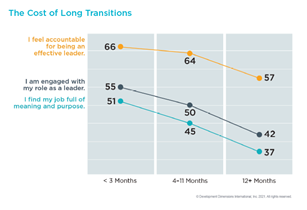
Leaders underwent stressful transitions reported very low confidence in themselves, regardless of how long it had been since they transitioned into the role. And the longer it took them to feel up-to-speed, the less engaged they felt in their role. They also felt less accountable for being an effective leader, and found a lack of meaning and purpose in their work. These issues can have a significant negative impact on their teams as they ripple down, leading to broader engagement and retention challenges.
As a result, there’s a very real long-term danger in ignoring highly stressful and slow transitions. While companies may be tempted to focus only on the future, it could be a mistake not to address the missed opportunities for their leaders who took on new roles during the pandemic.
Although the pandemic ramped up stress for everyone, the report found that more than one-third of leaders described their transition period as overwhelming or stressful. About five percent had frequent thoughts of quitting.
Other leaders reported that a stressful transition also led to burnout down the line, regardless of how long it had been since they made the transition. Of those who said they experienced a stressful transition, 37% said they felt “used up” at the end of each day, compared to 11% of their peers who experienced low-stress transitions.
Helping Find the “Lost Generation” of Leaders
The good news is that with the right support, companies can help their leaders get back on track. Here are some of the key practices that correspond with better leadership transitions and stronger long-term results:
- Let leaders know exactly what success looks like.
With competencies and realistic short- and long-term goals, leaders will know exactly what they need to do in order to be successful.
- Make assessments part of their preparation so they have objective data on their skill gaps.
In DDI’s Global Leadership Forecast 2021, leaders revealed that one of the top things they want is more formal assessments. Assessments help leaders better understand where they do well and where development would be beneficial. Assessments should serve as a roadmap for leadership development.
- Leaders need feedback and a sense of how they are perceived by others.
Leaders must receive feedback from a variety of sources. For example, a 360-degree feedback ensures they get insight from everyone on their team after about six months in their new role. Before undergoing a 360-degree assessment, leaders should first seek feedback from trainers and from their direct reports.
- Organizations need processes to help leaders understand the quantity and quality of leadership necessary to drive business outcomes.
Leaders might not always receive this information directly, so organizations need to make a point to give it to them. When organizations can predict how many leaders they need and the necessary skills leaders need to succeed, it helps reduce leaders’ overall stress. By predicting the skills leaders will need in their roles, they can start developing them sooner rather than later.
- Leaders need training to develop the skills they need to succeed in their new role in a timely manner.
When organizations take too long to begin developing their leaders, leaders are left on their own to figure it out — sometimes for years before receiving adequate training and support. The Global Leadership Forecast 2021 revealed that leaders prefer to learn in formal group programs, but if it’s not available, organizations should use self-driven learning to begin the immediate transition. It’s important to ensure self-driven and group learning content and approaches are consistent.
Slow Down to Speed Up
Right now, most companies are moving as fast as they can to prepare for a transformed future of work. It may seem like there’s no time to learn and reflect, instead expecting leaders to learn as they go. But the data clearly shows that this approach can have very long-term consequences. Taking the time to go back and support leaders who may have been rushed as they transitioned into their new role can help set them, and their teams, up for success down the road.