
Leaders have a lot on their plates for 2025. Rapidly changing technology, dispersed teams and an uncertain economy require new managers, senior executives and everyone in between to be at the top of their game.
Unfortunately, leadership development budget and headcount took a hit last year, with an average budget reduction of 70% between 2023 and 2024. Organizations need to prioritize leadership development and make all their resources count to keep up with today’s challenges.
But that’s not happening as widely as it should. According to a recent leadership development survey by TalentLMS, 45% of managers say their organization isn’t doing enough to develop future leaders.
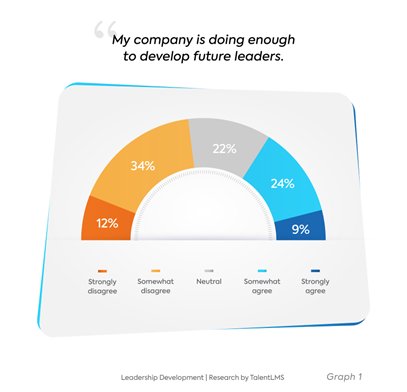
Here’s where many companies are falling short — and what you can do to bridge any gaps in your organization.
Where Companies Are Missing the Mark in Leadership Development
According to the managers we surveyed, companies often fall short in key leadership development efforts, including five crucial initiatives.
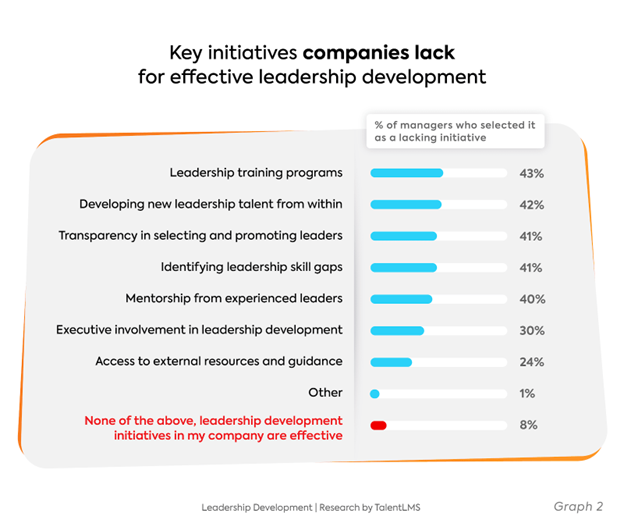
1. Leadership training programs (43%).
When leaders don’t get the skills training they need to stay at the forefront of their field and guide employees, it affects the whole company. Decision quality and speed suffer. Employees disengage, and the organization struggles to keep up with changes.
How are companies dropping the ball here? A significant number of those surveyed (33%) say their company’s leadership training resources aren’t satisfactory.
In addition, many businesses concentrate their leadership training efforts on senior executives and top performers — those already holding (and excelling in) leadership roles. This limited focus creates a skills deficit among new and future leaders.
2. Developing new leadership talent from within (42%).
Many respondents cited concerns about developing leaders within the company, with 43% saying their company hires from outside more often than developing existing employees.
This issue matters because promoting internal talent benefits both employees and organizations.
The opportunity for internal promotion is important to employees. Knowing there’s a future in your organization boosts morale and inspires loyalty.
And when you promote from within, you bring in leaders who already know your processes and company culture. They have an existing rapport with their team and can get up to speed and optimal productivity quicker.
3. Transparency in selecting and promoting leaders (41%).
Career progress is essential for engaging and retaining top talent. Employees need clarity around promotion processes and career paths to plan their futures.
Unfortunately, many feel left in the dark in their company.
Trust suffers when career paths are a mystery and companies put leaders in place without explanation. Suspicion and lack of trust undermine effective leadership.
4. Identifying leadership skills gaps (41%).
Sometimes, leaders don’t know what they don’t know. Lack of clarity around skill gaps means leaders can’t progress and may unwittingly hurt team culture and productivity.
Organizations need to know which skills matter most to their leaders’ success. A proper needs analysis is critical to articulating and addressing leaders’ upskilling and reskilling needs.
5. Mentorship from experienced leaders (40%).
Leaders need to learn from more experienced colleagues. A mentor doesn’t just offer advice or good ideas: They bring hard-won wisdom that can guide new managers and bosses through the tough challenges they’ll face.
Yet many managers report that their organizations are leaving new leaders to navigate their roles alone. Companies are failing to use one of their top leadership development resources — their people.
How to Bridge the Gap and Develop Future Leaders
The numbers above may seem discouraging, and leadership development is suffering in many organizations. But with some planning and a solid training approach, you can ensure your leadership development strategy hits the mark.
Here are some tips for prioritizing learning and development (L&D) for leaders in your organization:
- Create an online leadership learning portal. Give leaders a place to log on and complete training courses when it’s convenient and they can genuinely engage with the content. Include additional resources like case studies, articles and videos, and discussion groups so they can learn from and coach their peers.
- Host leadership hackathons for emerging talent. Bring together up-and-coming leaders to collaborate on real-world leadership challenges. Working together to quickly develop solutions and build creativity, innovation and problem-solving skills.
- Develop a transparent “leadership journey map” for all employees. Setting up clear steps in your leadership development process reassures employees that leaders have been trained and vetted. It also creates a foundation for succession planning.
- Use AI to match missing leadership skills with learning opportunities. AI tech can look at role-specific requirements and evaluate training results and other reports from your learning management system (LMS). It can then pinpoint skills gaps and propose personalized training paths.
- Run “leadership shadowing” exchanges across teams. Having employees observe leaders in other teams gives them insight into different leadership styles, decision-making processes, and team dynamics. Creating diverse work experiences offers a broader education, supporting leadership development across the company.
Embracing these practices will help you develop a learning culture — one that inspires leaders to grow and stay open to new educational opportunities.
Build Great Leaders Through Continuous Learning
Effective leadership development isn’t a single program or a one-time event in a leader’s career: It’s an ongoing process.
Creating a mentality of continuous learning will help you establish and support development initiatives that will prepare leaders to handle today’s challenges and navigate the uncertainty of the future. And just as important, it will have a ripple effect across your organization as talented leaders mentor, inspire and enable their teams to be ready for anything.