

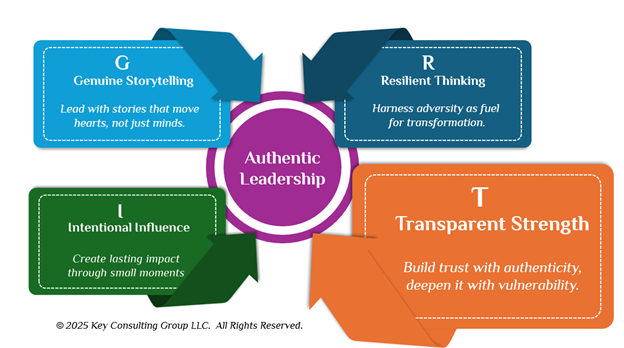
Leadership isn’t just about strategy or execution — it’s also about earning trust, fostering connection and leading with conviction. That’s where GRIT comes in:
- Genuine Storytelling builds influence through authentic narratives.
- Resilient Thinking turns adversity into fuel for growth.
- Intentional Influence shapes behaviors through small, powerful moments.
- Transparent Strength creates deep credibility through confidence and vulnerability.
At the heart of Transparent Strength is confident vulnerability — the ability to embrace both strengths and weaknesses in a way that builds trust and psychological safety. The most impactful leaders don’t pretend to have all the answers. Instead, they lead with authenticity, openly sharing challenges, admitting mistakes and seeking feedback. In doing so, they create environments where teams feel secure enough to do the same.
The result? Stronger teams, resilient cultures and organizations that thrive in uncertainty.
Why Confident Vulnerability Transforms Leadership
Confident vulnerability isn’t a weakness: It’s strategic trust building. When leaders model transparency, they foster a culture of openness and psychological safety, encouraging team members to speak up, share ideas and collaborate without fear of judgment. This approach makes teams more resilient, adaptable and innovative. Leaders who embrace confident vulnerability create environments where teams do more than just survive uncertainty: They use it as fuel for growth.
Mastering Confident Vulnerability as a Leader
Confident vulnerability requires balance. Leaders must gauge when and how to show vulnerability while maintaining strength and credibility. To ensure vulnerability is impactful, leaders should evaluate four key attributes:
- Motivation: Is the vulnerability driven by personal catharsis or team trust? External motivations — focused on team connection — are more effective than self-focused disclosures.
- Impact: Will sharing vulnerability strengthen or weaken team cohesion? The goal is to foster growth and trust, not discomfort or uncertainty.
- Trust Level: Is the existing trust foundation strong enough for vulnerability to be well-received? Transparency builds trust, but only if mutual respect is already established.
- Perceived Strength: How will the vulnerability affect leadership credibility? The best leaders find the balance — connecting authentically without undermining authority.
When leaders operate within this “target zone” — where motivation, impact, trust and perceived strength align — confident vulnerability becomes a leadership superpower.
Sometimes, Close Is Enough
Ideally, leaders meet all four conditions within the target zone to maximize the benefits of transparent strength. However, perfection isn’t necessary — leaders who meet at least three out of four conditions can still foster a supportive and productive environment.
For example:
- External motivation, positive impact and high trust are present, but perceived strength is slightly lower. The leader can still create a psychologically safe space for growth.
- High trust, strong credibility, and motivation exist, but the impact is uncertain — this leader refines their messaging to ensure vulnerability strengthens cohesion rather than causing discomfort.
The key is awareness and balance. Leaders who continuously adjust and refine their approach create teams that are cohesive, motivated and resilient.
Transparent Strength in Action
The best leaders don’t just talk about trust. Rather, they actively build it through transparent strength. Here’s how:
- Own Mistakes and Growth: Acknowledge missteps but frame them as lessons learned rather than weaknesses.
- Model Self-Awareness: Demonstrate emotional intelligence by recognizing personal strengths and gaps.
- Encourage Open Conversations: Create safe spaces for team feedback and honest discussions.
- Balance Confidence and Humility: Stay decisive while embracing adaptability.
- Lead With Strength — Not Perfection: Focus on progress, resilience and connection, not unrealistic standards.
Transparent strength is the foundation of authentic leadership — the kind that drives trust, fuels engagement and creates long-term success.
So, what’s one small step you can take today to lead with transparent strength? One step can pave the way toward a more connected, courageous and trusted version of leadership.


