
Google “top training trends for 2017,” and a litany of predictions litter the screen. Our profession does a lot of crystal ball-gazing, a lot of it around single issues like microlearning, mobile learning and content curation. But if we put these trends together with well-established developments of the last 20 years, an interesting macro trend emerges: the need for learning and talent professionals to also be media professionals. It’s safe to say that the work of creating and curating masses of content will be an important element in many trainers’ future job descriptions.
Much has been written predicting these trends and their impact. These pontifications have been the easy part. Pundits can talk about technology and how affordable it is, the fact that most people in the U.S. reach for their smartphones within 15 minutes of waking, or how technology is easier to use than ever. They can even show examples of pioneering work by thought leaders and innovators. Less has been written about how traditional organizations can help trainers become content creators and curators and how training departments can churn out a lot of content that’s high quality for e-learning and classrooms.
What skills will trainers need to quickly develop high-quality content? We easily define the facilitator’s skillset – things like managing classroom dynamics, partnering with business and so forth. But what media skills do we need to add? Do we need a new competency map? Should content creation and curation be a specialization, or should all trainers have these skills?
What about the training department? Is the typical structure of today’s training function supportive of this evolution? Is it designed to publish a lot of content, do it fast and maintain a high standard?
Events and Programs
Many training departments are designed to efficiently deliver learning events and distribute e-learning programs. That’s what we’ve been doing for the last 15 years. Support functions like business development, evaluation and instructional design are focused on delivering results in terms of events and programs. Very few training organizations have been designed to produce high volumes of quality learning content.
Without appropriate structures and workflows, trainers will find themselves tripping over policies and procedures designed to support an events model that by consequence makes media production clumsy and ad hoc. Content will take longer to produce, and there will be fewer assurances that all content will be produced to a high standard.
Tomorrow’s Training Departments
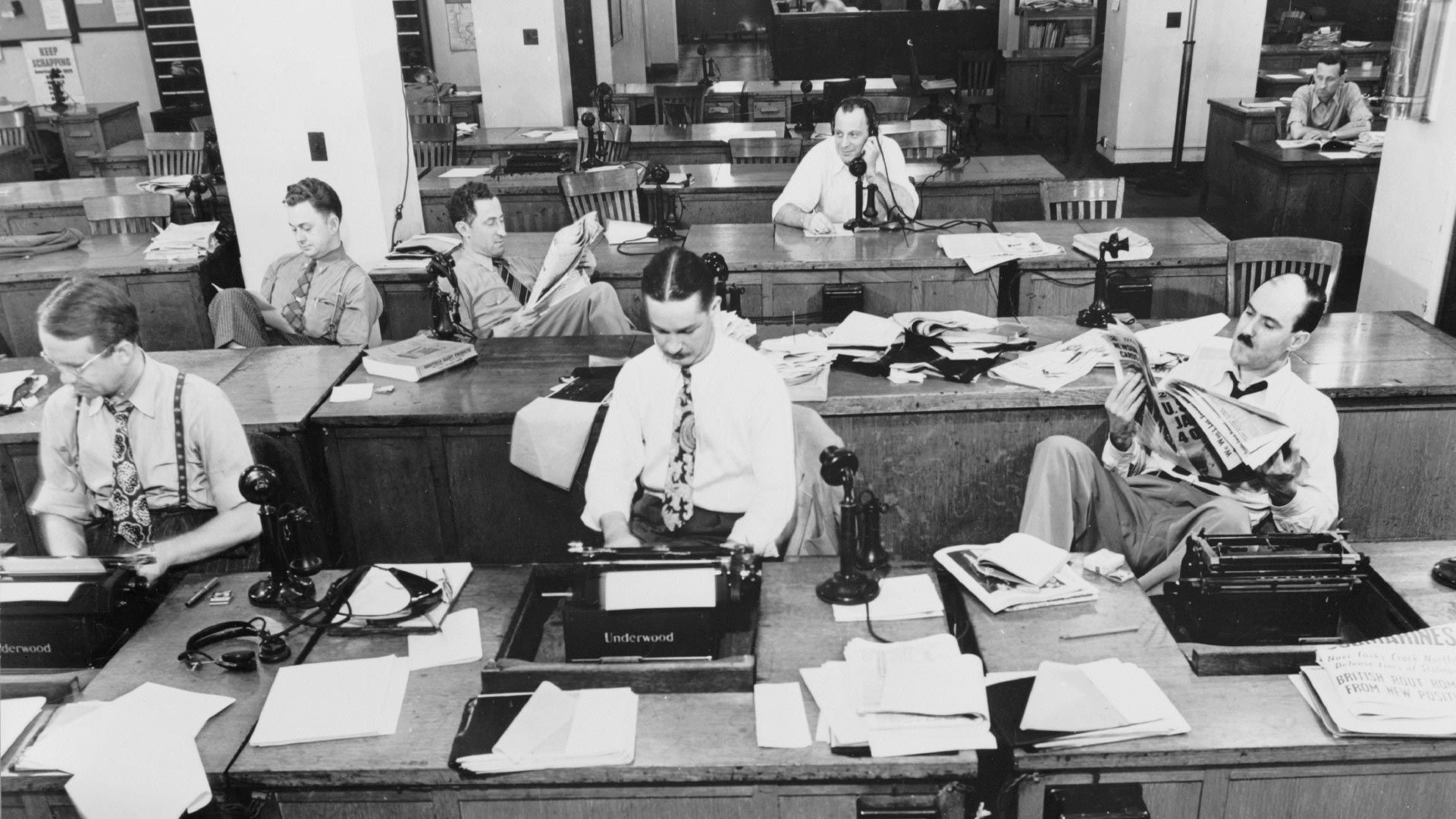
Newspaper and broadcast newsrooms churn out high volumes of quality content every day. Over the past 15 years, they’ve improved their efficiency as their budgets have tightened. It makes sense to learn from people whose bread and butter have relied on doing what we will need to do in the future. Perhaps a newsroom model could help us shift the traditional training department into the future, where being a content factory is combined with the traditional role of managing events.
Planning to Deliver Learning Content
How do newsrooms become content factories? There are many ways to answer this question, but here are three lessons the training function can learn from newsrooms:
- Newsrooms devote significant resources to professionalize content. They do this by setting editorial and production standards. Every newsroom has a style manual and set of editorial guidelines. Reporters are trained to put them into action, and editors review the content to ensure it meets them.
- Newsrooms build robust production workflows. Workflows provide step-by-step processes for creating and reviewing content to save time and reduce duplication. Good workflows are also designed around sequences that minimize mistakes, which are costly and time-consuming to correct. They improve teamwork and ensure healthy production disciplines become habits.
- Newsrooms equip reporters with professional media skills. They learn editorial skills, such as judgment, reporting and crafting content to be easily understood. They learn production disciplines to ensure content powerfully conveys their message. Often, reporters are apprenticed or informally mentored by senior staff.
These are three methods that learning executives can consider when reimagining their training departments. They are solid practices that enable newspapers and TV and radio stations to consistently create content that engages their audience.
This series of articles will explore what these practices might entail if implemented in a training department. There is no right or wrong model but a series of practices that you can adopt and adapt to support your learning structure.
Tomorrow’s training departments will do more than just deliver events. They will also be content factories. It’s important for our profession to think clearly about how we can achieve this transformation so we can create and curate content quickly, cost effectively and at a high standard.


