Integrating tools and technologies into your learning or training initiative requires a fine balance — picking tools that help enable learning, but in no way distract the learner from absorbing the content.
But, what about tools that support a coach?
Training Industry, Inc. conducted a research study on the sustainability of sales training programs with a focus on best practices. We looked at how companies support sales coaches, and found a few interesting parallels to the use of tools and technologies in the greater training environment.
The participants, a mix of learning leaders and sales leaders responsible for sales team development from 120 companies, were asked to share the current and planned use of a group of enabling tools and technologies that we have seen companies use to support coaching initiatives.
The tool choices we offered were a wide range of potential additions to the classic one-on-one coaching environment. Ideas such as role playing, short e-learning pieces, adding repositories dedicated to the coaching, and even gamification were all potential selections.
Tools Currently in Use
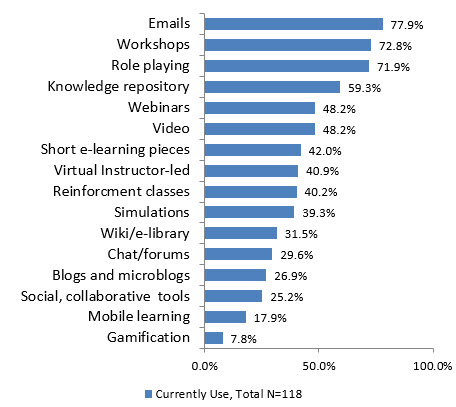
The results were not surprising for the tools and technologies that companies are currently using to support sales coaching. Emails, workshops and role playing topped the list with more than 70 percent adoption across our study group. Additionally, the lack of adoption of social tools, chats/forums, blogs and collaboration tools were also not surprising; none of which could crack more than 30 percent adoption. (See Figure 1.)
The interesting data fell in the middle of the chart, with 48 percent of companies adopting video and webinars, and nearly 60 percent including repositories into their coaching solution. This focus on asynchronous aids paralleled a lot of the discussion and presentations from our 2013 Partnering for Performance conference, including using short form video.
With the cost of video production dropping and the number of video enabled collaboration tools on the rise, video appears to be gaining momentum in both the corporate training and coaching environments. Whether as a means to show examples of how certain behaviors should look, or to simply illustrate a scenario as part of a coaching exercise, video is emerging as a valuable learning technology.
Figure 1: Tools and Technologies Currently in Use for Sales Coaching
Tools Not Planning to Use
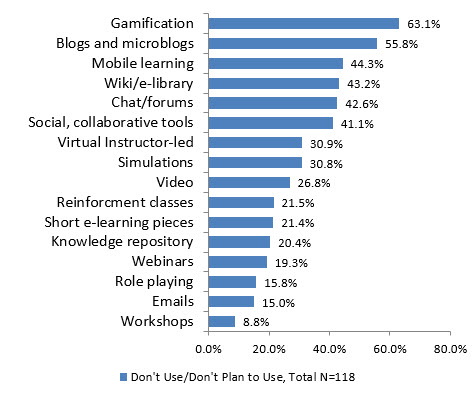
Participants sent a clear message when it came to selecting the tools that they do not plan to introduce as part of their sales coaching strategy. As shown in Figure 2, gamification and blogging stood out as “bad ideas” to introduce into sales coaching programs (both had more than 50 percent of participants citing no).
It was interesting to see participants steer away from gamification in this research study, since we have seen a substantial number of organizations include this tool set in their sale training programs. In fact, gamification in the sales training environment has been presented as one of the dominant use cases, leveraging the natural competitive nature of salespeople, sales teams and leadership. So, why not incorporate it into your sales coaching program? Through this research we have learned that coaching is a far less structured activity when compared to sales training. Only 21 percent of participants said coaching is structured based on their sales methodology. Given that it is less structured, any gamification techniques to encourage the use of coaches would have to be carefully implemented to avoid unnecessary use of the coaching resources to “win” or score more points for his/her team.
Another interesting takeaway was that 44 percent of participants said that they would not be introducing any mobile learning into their coaching strategy for their sales teams. Although the low current usage is consistent with what we have learned in some of our other studies, the fact that participants do not plan to introduce mobile learning into coaching programs suggests that the business case for mobile learning, even for salespeople, is still not clear. I believe that the use case still needs refinement in regards to the potential use of mobile learning. We also need to do a better job articulating the value of coaching before organizations are willing to make the investment in this area.
Figure 2: Tools and Technologies Not Planned to be Used for Sales Coaching
In Summary
This research study showed us that sales coaching does have some unique challenges and introducing tools and technologies may help. The participants agreed that the core early investments should be focused on the support aids that we are most comfortable with, specifically emails, workshops and role playing. The next wave of investment will be in mobile learning, short form e-learning, video and the introduction of social platforms in sales coaching programs.
The jury is still out on whether these investments would help improve the impact of coaching programs since the usage of mobile learning and gamification is relatively low.