In 2013, Training Industry’s studies focused on a variety of topics, ranging from onboarding and knowledge transfer to the use of virtual environments in leadership development.
Below is a compilation of our most interesting findings from this year:
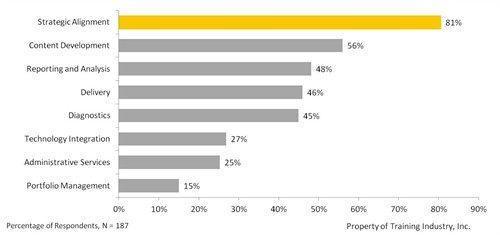
1. Strategic Alignment. Eighty-one percent of learning leaders rate strategic alignment (i.e., designing learning programs that align with business objectives) as critical for exceptional training organizations.
ACTION ITEM: Look for ways to strategically align your learning programs with business objectives.
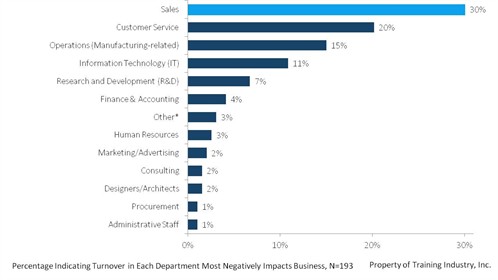
2. Turnover. High sales department turnover produces the greatest negative impact on business. This is, perhaps, unsurprising given the high degree of turnover in this department. Customer Service, Sales, and Information Technology (IT) have the highest reported turnover rates.
ACTION ITEM: Look for ways to retain sales people with effective onboarding programs.
Read the report here.
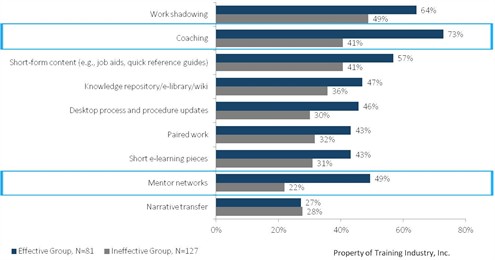
3. Knowledge Transfer. An effective knowledge transfer plan can help to mitigate the costs of turnover. Effective organizations use coaching and mentor networks approximately twice as often as those that are rated ineffective when it comes to knowledge transfer.
ACTION ITEM: Try to build coaching and mentoring into your knowledge transfer programs.
Read the report here.
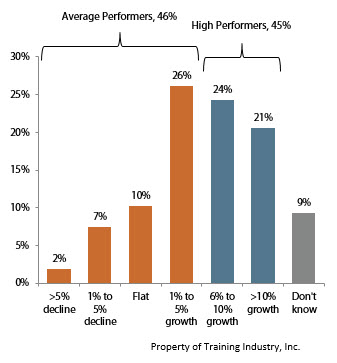
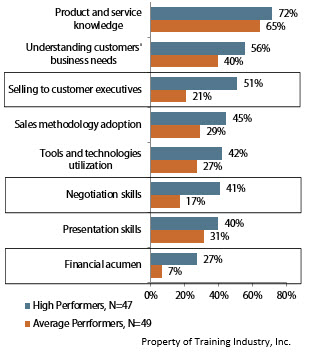
4. High Performing Sales Organizations. With approximately 81 percent reporting that their sales training programs are effective, why aren’t more companies steadily increasing sales and revenue? High Performers rate their sales professionals two to four times higher when it comes to selling to customer executives, financial acumen, and negotiation skills than do Average Performers.
ACTION ITEM: Consider introducing selling to customer executives, financial acumen, and negotiation skills into your sales development strategy.
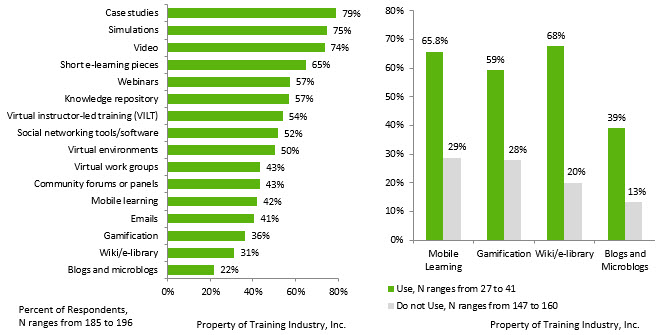
5. Virtual Tools for Leadership Training. Learning leaders rated case studies and simulations most useful and mobile learning least useful for supporting leadership development; however, they were two to three times more likely to rate a tool as useful when their organization was currently using it.
ACTION ITEM: Use case studies and simulations and consider experimenting with mobile learning, gamification, wiki/e-libraries, and blogs in your leadership development programs.
Read the report here.
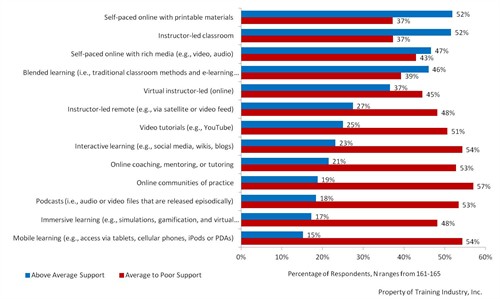
6. Support for Corporate Online Learning Libraries (COLLs). Most COLLs can improve by providing better support for mobile and interactive learning. In contrast, the majority of COLLs are providing above average support for self-paced online and instructor-led classroom instructional methods.
ACTION ITEM: Look to improve your support for mobile and interactive learning.
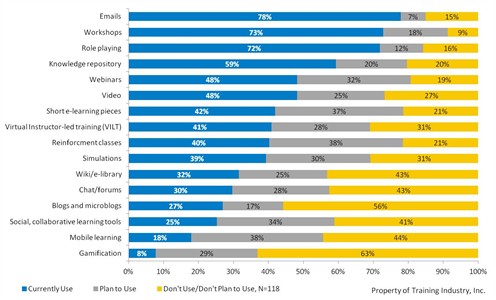
7. Technology for Sales Coaching. While emails are most commonly used, mobile learning, reinforcement classes, and short e-learning pieces are the tools/technology most planed for use.
ACTION ITEM: Include mobile learning, reinforcement, and short e-learning in order to maintain the impact of your sales coaching programs.
Read the report here.
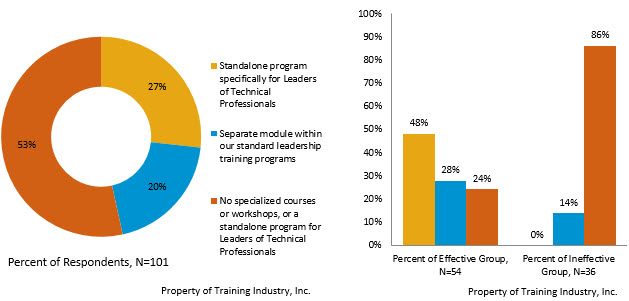
8. Leading Technical Professionals. Over 50 percent of organizations do not offer specialized courses, workshops, or stand alone programs for developing Leaders of Technical Professionals. However, over 75 percent of effective companies offer development programs for these types of leaders.
ACTION ITEM: Consider providing specialized training for your Leaders of Technical Professionals.
Read the report here.
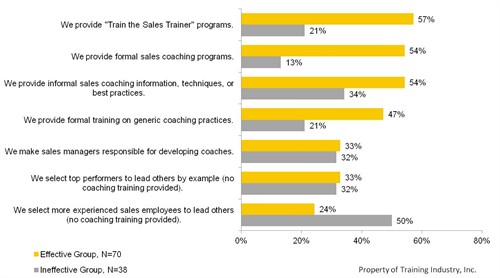
9. Sales Coaching. What makes sales coaches successful? Our research shows that formal sales coaching programs that provide “Train the Sales Trainer” courses are most effective.
ACTION ITEM: Consider more emphasis on structuring your sales coaching and sales training programs.
Read the report here.
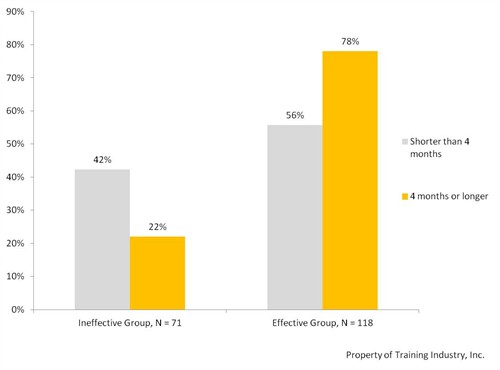
10 . Leadership Training Duration. While the majority of respondents indicated that their organizations’ leadership training initiatives last for 1 week or less, organizations with longer lasting initiatives were more likely to be rated as effective.
ACTION ITEM: Consider moving from an event-based leadership training model to a longer-lasting development program.