
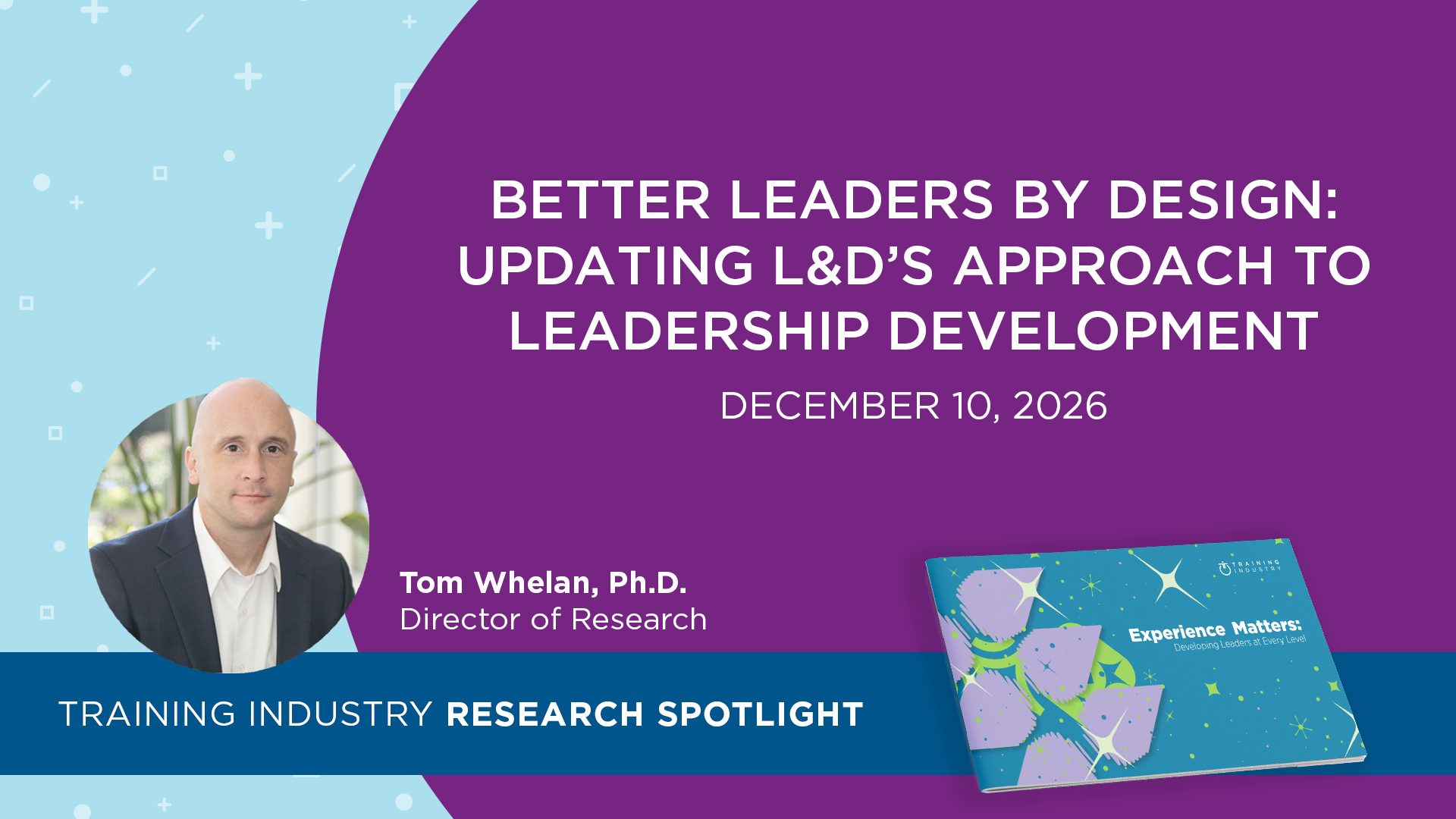
Leadership development remains one of the largest areas of corporate training investment, yet many organizations still approach it as a universal skill set rather than a collection of capabilities shaped by role, context and experience.
Many programs assume strong managers automatically become strong leaders or apply the same development approach across organizational levels and functions. Meanwhile, shifting workforce dynamics and business priorities are raising expectations for individual leaders when it comes to adaptability, communication and innovation.
Our research shows that two-thirds of organizations expect their leadership needs to change within the next year, increasing pressure on learning and development (L&D) leaders to reconsider if not rethink how leaders are developed.
According to Training Industry research, 66% of organizations believe their leadership needs are likely to change within the next 12 months.
By building capabilities such as influence, communication, people management, innovation and decision-making, organizations can strengthen leadership pipelines beyond traditional managerial training. Reorienting development practices with business context and real leadership challenges enables L&D teams to create programs with pragmatic and measurable impact.
Drawing on exclusive Training Industry research, we’ll explore the distinction between managing work and leading people, the leadership capabilities organizations need most and the gaps that continue to obstruct development efforts. You’ll gain evidence-based insights to design leadership programs that are relevant, effective and aligned with business goals.
In this session, you’ll be able to answer questions like:
- How should leadership development differ for new managers, middle managers, senior leaders and executives?
- What leadership capabilities are most often lacking, and how can programs close those gaps?
- How can organizations meaningfully distinguish management training from leadership development?
Leadership development is most effective when guided by evidence rather than assumptions. By understanding how leadership develops and which capabilities matter most, learning leaders can make smarter decisions about program design, talent pipelines and learning culture. The result is a stronger leadership bench inside the organization and an enterprise better prepared for future challenges.
Included with this session, you’ll gain access to these exclusive, data-driven Training Industry research products:
- [Infographic] Next-Gen Leaders: What Today’s World Needs from Leadership Development
- [E-Book] Experience Matters: Developing Leaders at Every Level
Brought to You by:

This webinar is proudly sponsored by
