
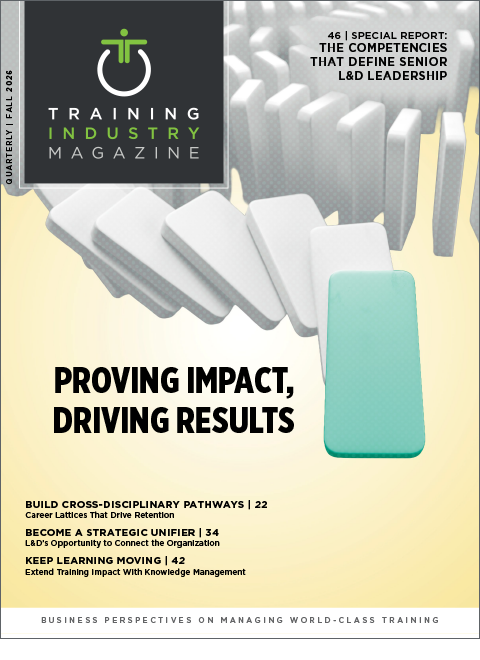
Published in Fall 2026
The conversation around training impact is evolving. For years, we’ve talked about training as if the end of the learning program were the finish line. Employees complete the course, pass the assessment and perhaps even rate the experience highly. Then we move on to the next program.
But what happens next? I’m noticing more attention being paid to something that sits between training and those bigger business outcomes: What did people do with what they learned?
Training is an intervention. It gives people knowledge, develops skills and creates opportunities to practice. But its value doesn’t stop when someone clicks “complete.” The real test comes later, when an employee needs to make a decision, solve a problem or respond differently because of what they learned.
That distinction is becoming even more important as artificial intelligence (AI) changes the nature of work. Organizations are investing more in AI training but knowing how to use an AI tool is only part of the equation. Employees also need to know when to question it.
For instance, one measure of effective AI training is whether employees can recognize when AI gets something wrong. Are they catching the hallucinations, incorrect citations and made-up facts? Are they questioning the output instead of simply accepting it? The training may introduce the skill, but the behavior demonstrates whether the skill has taken hold.
The same principle is true for training more broadly. As work continues to change, organizations need employees who can think critically, solve problems, adapt to new situations and apply their expertise in ways technology cannot easily replicate. These capabilities develop through practice, feedback, reinforcement and opportunities to use new skills on the job.
Learning and development (L&D) must build intentional learning experiences that allow employees to practice, apply and reinforce new skills over time, with support from managers and resources they can access when they need them.
That idea runs throughout this issue of Training Industry Magazine. We’re looking at how learning leaders can create a comprehensive training strategy that improves performance and contributes to better business outcomes. You’ll find features on overcoming strategic fatigue in learning and development, the art of writing better training content and building learning strategies that support lateral career growth.
We also have a special report on the Training Industry Senior Leader Competency Model, exploring the skills and capabilities senior learning leaders need to make an impact in the C-suite.
Ultimately, training shouldn’t be judged only by what happens inside the learning experience. It should be judged by what happens because of it.
As you look ahead to next year, consider where your team’s finish line is. Is it when employees complete training, or when they put that learning into practice and create meaningful change?