
Sales coaching often falls through the cracks. Sales managers are stretched thin overseeing direct reports, forecasting revenue and closing deals, all while trying to hit their number. This leaves little time for the kind of personalized, in-the-moment coaching that drives real behavior change.
Research continues to underscore what most learning and development (L&D) professionals already know: effective coaching is one of the highest impact levers for improving sales performance.
Enter AI.
AI-powered coaching tools are quickly becoming essential in the learning and development toolkit — especially in sales. These technologies are not here to replace human coaches but to extend their reach, bridge critical gaps and bring consistency and scale to a process that is historically underdelivered.
The Challenge of Sales Coaching and How AI Can Help
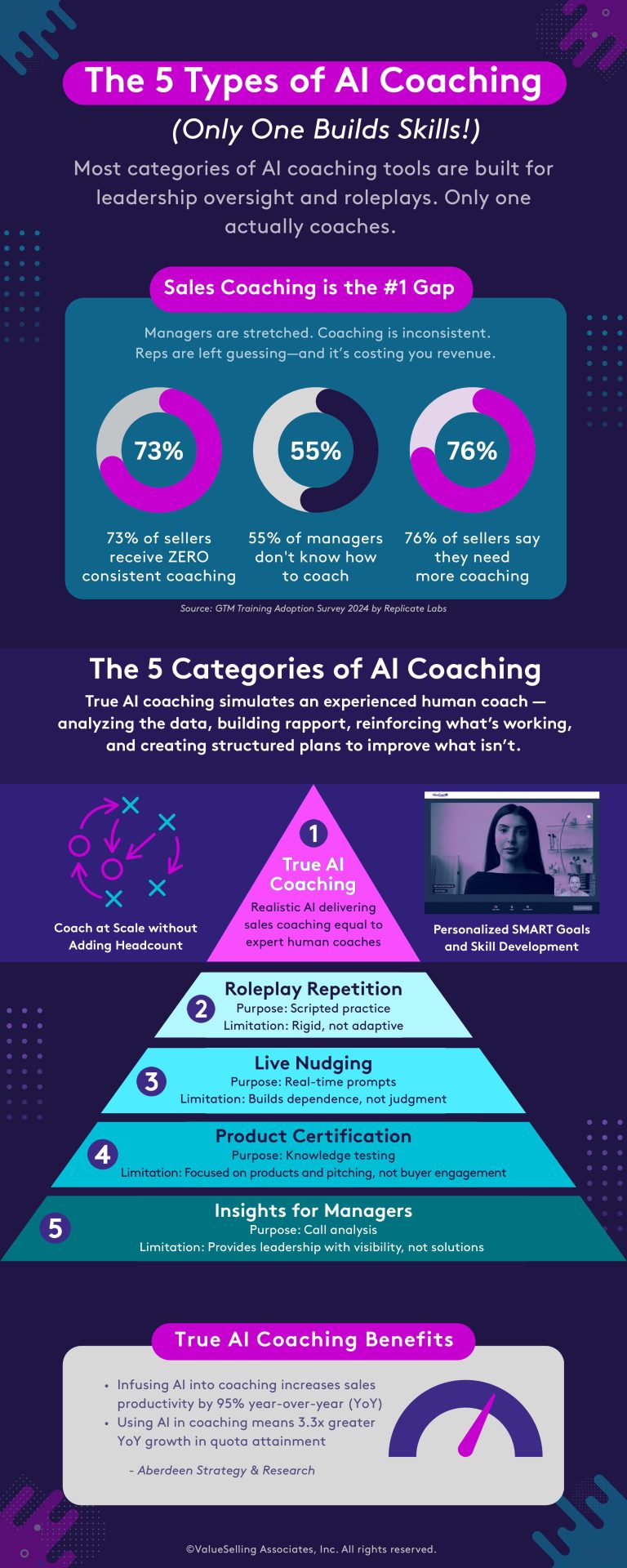
According to Replicate Labs, 73% of sales reps receive inconsistent coaching and 76% say they need more coaching. It’s not because companies don’t care; it’s because sales managers are overloaded. Many manage large teams and spend their days reacting to immediate needs rather than proactively developing talent. Coaching, while recognized as important, is often the first thing to fall off the priority list when things get busy.
Even when time is carved out for coaching, 55% of sales managers admit they don’t know how to coach effectively. They were promoted for selling, not for developing others and most have never been formally trained to coach.
Coaching requires a high level of mastery, especially when applying a formal methodology. To coach well, managers must not only understand the framework, they need to internalize it deeply enough to recognize how reps are applying it, diagnose gaps and guide improvement.
The reality? Many managers go through the same training as their reps at the same time. They rarely are able to build enough fluency to coach confidently and consistently. Ideally, managers would get additional coaching to reinforce their own knowledge, but that’s not practical or cost-effective.
This is where AI-powered coaching presents a compelling and timely solution.
AI tools can augment overburdened managers by offloading some of the time-intensive aspects of coaching — without sacrificing insight or quality. Instead of a manager needing to read through transcripts or watch recordings — which could take hours — an AI tool can process that same information in seconds. Even better, AI can be trained to recognize what “good” looks like based on the company’s methodology and sales standards and provide constructive, unbiased feedback.
Ultimately, AI doesn’t replace the manager’s role; it enhances it. It handles the repetition, speeds up analysis and provides a consistent baseline, freeing up managers to focus on high-value conversations that truly move the needle.
Why AI Coaching Makes Sense for Sales L&D
Sales reps are unique learners. They operate under pressure, in high-stakes environments and on tight timelines. They’re often mid-pipeline, wrestling with objections or stalled deals. In these moments, they need targeted coaching that helps them adjust and perform in real time.
Traditional training — whether classroom workshops, eLearning modules or roleplays — can build foundational knowledge. Without sustained reinforcement, the learning fades fast. Think of it like this: If you wanted to become a professional golfer, you wouldn’t just take one lesson. You’d practice every day, with a coach, building muscle memory until your swing becomes second nature.
The same is true in sales. Developing skills like objection handling, opportunity qualification or value articulation requires deliberate practice, real feedback and ongoing support. Coaching is what makes skills stick. It’s the difference between reps who understand the material and reps who use it instinctively under pressure — what learning professionals call being unconsciously competent.
That’s why sales training must be approached as a change management initiative, not a one-time event. It requires executive sponsorship, clear objectives, relevant content and a plan for reinforcement. That reinforcement is possible when coaching is built in from the start.
According to a study by ValueSelling Associates and Aberdeen Strategy & Research, infusing AI in sales coaching activities drives greater efficiency and employee engagement. Companies have increased sales productivity by 95% and improved employee engagement by 30%.
This is where AI steps in to scale coaching without overburdening managers or sacrificing personalization and quality. Instead of waiting for a one-on-one that may or may not happen, reps can get the guidance they need when they need it, reinforcing training, closing skill gaps and building confidence through daily practice to flex muscle memory.
AI Tools Leading the Way
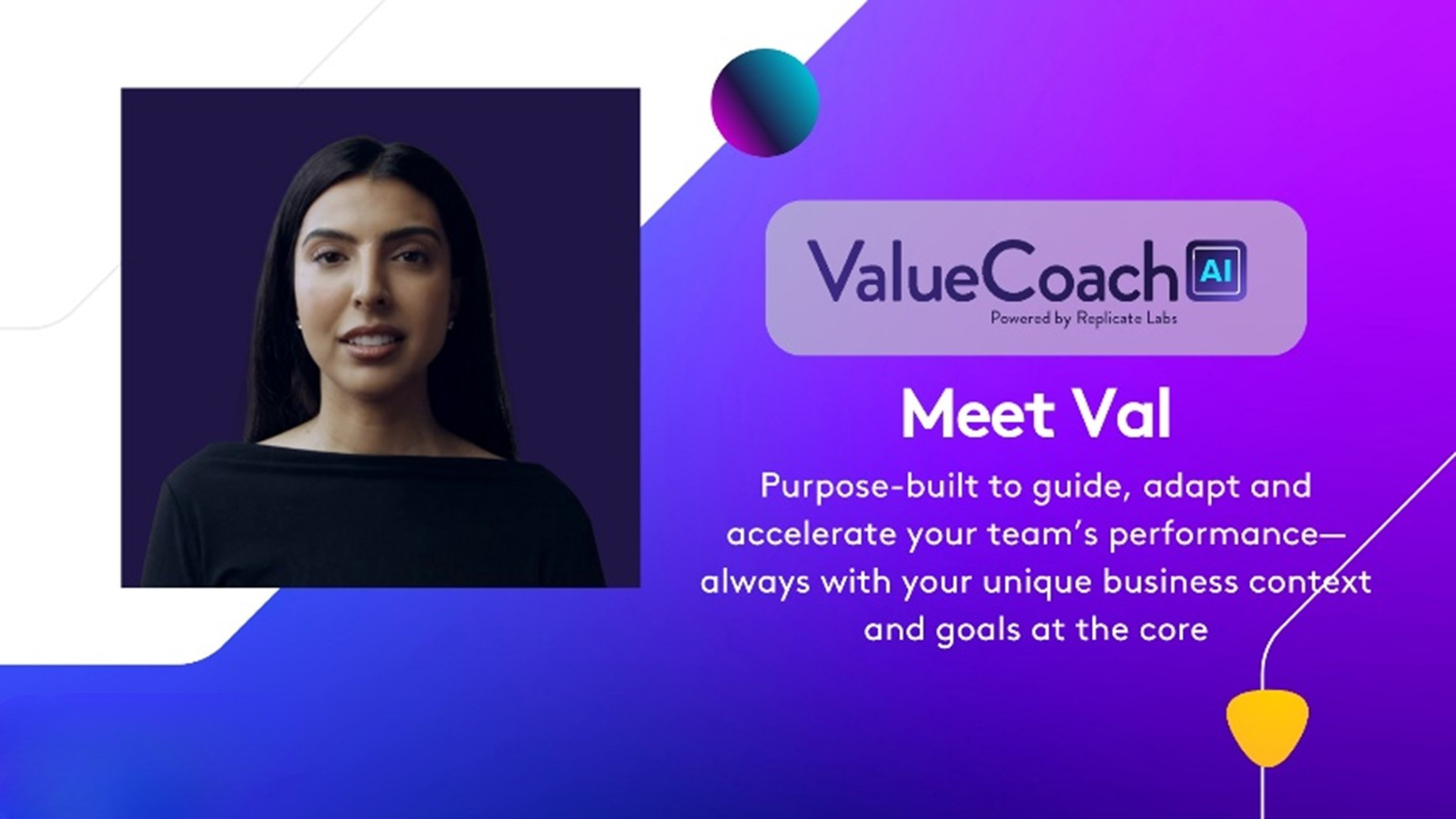
One example of this innovation is Val, an AI-powered avatar coach developed by ValueSelling Associates. Designed to simulate the role of an experienced sales coach, Val engages reps in realistic practice conversations and provides feedback aligned with a proven methodology. While not a replacement for managers, tools like Val illustrate how AI can reinforce training and make coaching more accessible across teams.
Other tools making waves in AI coaching include:
- Salesforce Agentforce: Nurtures inbound leads 24/7 and provides every rep with a dedicated AI coach to improve productivity.
- Second Nature AI: Enables reps to practice sales conversations in a safe environment using AI-driven simulations.
- Gong and Chorus: Use conversation intelligence to surface coaching opportunities, though they still rely on humans to follow through.
Democratizing Development: A Win for Reps and Managers
AI coaches offer one of the most exciting opportunities in L&D today: making elite-level coaching available to every rep, not just top performers or those lucky enough to have hands-on managers.
This levels the playing field (especially for newer reps or those working remotely) by giving them access to consistent feedback, coaching and growth opportunities.
And it frees up managers to focus their time on high-leverage activities, knowing that coaching is happening even when they’re not in the room.
More broadly, AI coaching aligns beautifully with learning best practices:
- Personalization: Tailored feedback and development plans
- Performance focus: Coaching tied to real deals and KPIs
- Continuous learning: Ongoing skill development, not one-and-done training
- Just-in-time delivery: Guidance delivered when and where it’s needed most
The Road Ahead
As AI tools become more advanced, L&D leaders have an opportunity — and a responsibility — to leverage them strategically. This doesn’t mean replacing human connection or abandoning traditional coaching. It means augmenting your sales enablement strategy so managers no longer have to choose between coaching and all their other responsibilities. The right AI tools can scale their support, reinforce methodology and help reps improve.
The organizations that succeed in the next decade will be the ones that invest in scalable, personalized development, starting with coaching. AI is no longer a futuristic idea; it’s a practical, powerful tool for delivering the kind of learning experiences that drive performance, engagement and retention.
For sales teams, it means having the best coach in the business — ready anytime, anywhere.


